










Breaking News
 The Hybrid Semi-Truck Is Real: Big Updates from Environment Canada
 Public schools are imploding by 1.5 million kids as parents seek alternatives...
 Securing Peace with Iran Compels Trump to Divorce Israel
 Seven 'far-right' candidates have won in Latin America since USAID was defunded…
Top Tech News
 World's first consumer wing-in-ground effect aircraft takes flight
 America's Military Readiness Depends On Deployable Nuclear Power
 License Plate Cameras Are About To Start Tracking A Lot More Than Just Your Car
 Heads up: Apparently the government is hiding cameras inside fake utility boxes
 Sodium Batteries And EVs That Power The Grid: Inside GM's Big Energy Push
 NUCLEAR ENGINE - UNLIMITED LUXURY - 20 YEARS WITHOUT REFUELING
 China Unveils Nuclear-Powered Floating Hub For Green Shipping
 China Launches World's 1st Commercial Brain Chip, Beating Elon Musk's Neuralink!
 Modular next-gen US nuclear reactor goes critical
 How EMF's cause disease


Securing Peace with Iran Compels Trump to Divorce Israel
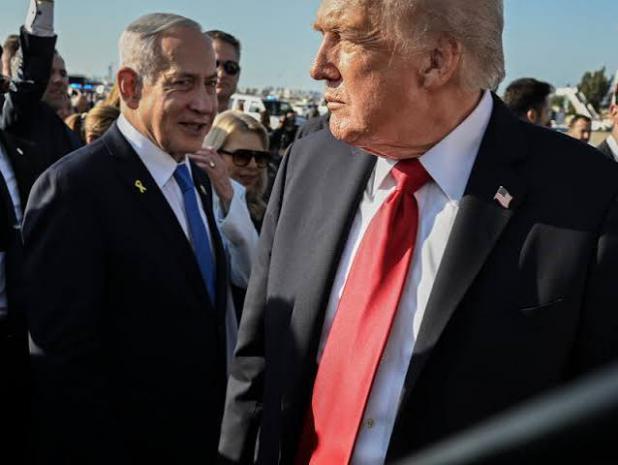
After President Donald Trump signed a preliminary Iran peace deal on Wednesday, Israel's occupation and bombing of Lebanon presents the central obstacle to a final agreement and lasting peace. Securing and upholding the final peace deal will require the kind of confrontation with Israel that Trump has avoided for most of his presidency, given Iran's leverage over the Strait of Hormuz and global energy flows.
Iran has insisted that the ceasefire and now the framework peace deal cover the entire regional war and thus require that Israel end its occupation of southern Lebanon. Iran's Supreme National Security Council declared Monday that under the framework deal, called a memorandum of understanding, "war and military operations on all fronts—including immediately ending the Lebanon front tonight and permanently—will conclude."
That demand stems directly from the "long-term security guarantees" Tehran has invoked across its public statements since the beginning of the conflict. For those guarantees to mean anything, Tehran needs Trump to rein in Prime Minister Benjamin Netanyahu and ensure that Israel does not launch another surprise attack against Iran. The only way Washington can demonstrate that commitment is to pressure Israel now, in Lebanon. As Trita Parsi of the Quincy Institute has argued, binding Israel to a ceasefire is a "test of America's willingness, and its ability, to restrain its closest regional ally."
Iran is right to doubt that Washington will exert that kind of pressure over Israel. After Israel's latest bombing of Beirut's southern suburbs, Iran's Speaker of Parliament Mohammad Ghalibaf wrote that the incursion into Dahiyeh "has once again shown that America either lacks the will to fulfill its commitments or the ability to do so." Recognizing that Israel's violent quest to grab territory in Lebanon could only be accomplished with U.S. approval, Iran's leading negotiator declared that "the game of bad cop and good cop is outdated."
Up until that point, the White House had seemed to use Axios and other friendly outlets to give Iran the impression that it was pressuring Israel, even as it kept giving its protectorate in the Middle East the green light to occupy its northern neighbor. Indeed, while American audiences heard from the Axios reporter Barak Ravid that Washington was "furious" over the Lebanon strikes, Israeli audiences heard the opposite.