










Breaking News
 The Hybrid Semi-Truck Is Real: Big Updates from Environment Canada
 Public schools are imploding by 1.5 million kids as parents seek alternatives...
 Securing Peace with Iran Compels Trump to Divorce Israel
 Seven 'far-right' candidates have won in Latin America since USAID was defunded…
Top Tech News
 World's first consumer wing-in-ground effect aircraft takes flight
 America's Military Readiness Depends On Deployable Nuclear Power
 License Plate Cameras Are About To Start Tracking A Lot More Than Just Your Car
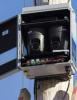 Heads up: Apparently the government is hiding cameras inside fake utility boxes
 Sodium Batteries And EVs That Power The Grid: Inside GM's Big Energy Push
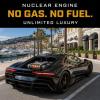 NUCLEAR ENGINE - UNLIMITED LUXURY - 20 YEARS WITHOUT REFUELING
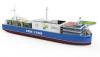 China Unveils Nuclear-Powered Floating Hub For Green Shipping
 China Launches World's 1st Commercial Brain Chip, Beating Elon Musk's Neuralink!
 Modular next-gen US nuclear reactor goes critical
 How EMF's cause disease


How America's war crowned Iran as the Gulf's new hegemon
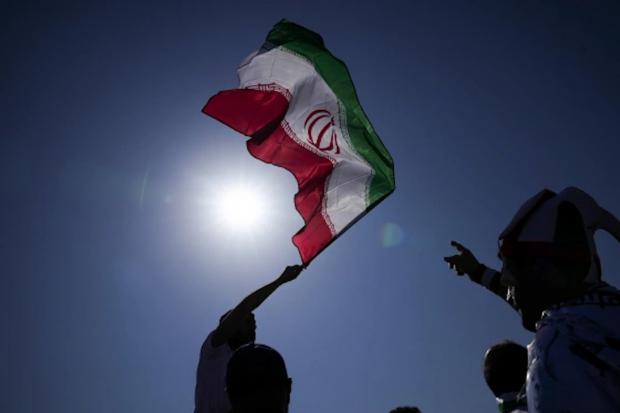
There is a particular irony — the kind that history savors — in the fact that the United States set out in February 2026 to destroy Iran as a regional power and instead ended up cementing its dominance.
This is not a paradox – it is a pattern. Anyone who has paid attention to American foreign policy in the Middle East over the past three decades will recognize it immediately, because it has happened before, and because many of us said, in advance and in print, that it would happen again.
I wrote in "Quagmire" in 1992 that the United States had no strategic interest in becoming the permanent arbiter of Middle Eastern politics and no capacity — military, cultural or institutional — to remake the region in its image.
I wrote in "Sandstorm" in 2005 that the invasion of Iraq had not diminished Iranian power but enormously magnified it, by eliminating Tehran's primary regional counterweight and handing the country's Shia majority a state.
Washington's response to both arguments, then and now, was to produce more think-tank papers, schedule more Senate hearings and launch more wars.
Now we are living in the aftermath of the latest iteration of this catastrophe, and the picture is becoming unmistakably clear: Iran has emerged from the 2026 war not as a broken state but as the preeminent power in the Persian Gulf.
The mullahs whom Donald Trump promised to sweep from the stage have been replaced, yes — but by a harder, younger, more capable military leadership under Mojtaba Khamenei and the Islamic Revolutionary Guard Corps that has shed the theological defensiveness of the founding generation and adopted the cold strategic calculus of a state that knows it survived, and knows what it survived.
This is not the Iran that signed the JCPOA. This is an Iran that has been to war and won.
Let us be precise about what "winning" means here, because Washington's defenders will dispute the term. Iran did not win in the sense of defeating the United States militarily — no one is suggesting the IRGC routed the Seventh Fleet.