










Breaking News
 #656: 1991
 How I Would Learn Herbalism From Scratch Today
 Peter Thiel's HIDDEN Elite Club "DIALOG" – The Tech Bilderberg NO ONE WAS SUPPOSED TO
 Retail Sales Surge 0.9 Percent in May, But Look Closer at Why
Top Tech News
 Heads up: Apparently the government is hiding cameras inside fake utility boxes
 Sodium Batteries And EVs That Power The Grid: Inside GM's Big Energy Push
 NUCLEAR ENGINE - UNLIMITED LUXURY - 20 YEARS WITHOUT REFUELING
 China Unveils Nuclear-Powered Floating Hub For Green Shipping
 China Launches World's 1st Commercial Brain Chip, Beating Elon Musk's Neuralink!
 Modular next-gen US nuclear reactor goes critical
 How EMF's cause disease
 This Company Will Add Phone, AirPod, and Smartwatch Trackers to License Plate Readers
 Elon Details SpaceX AI Data Center in Space Details and Roadmap
 5-in-1 miniature surgical robot is the size of a seed


"Zero Hormuz Dependency": UAE Races To Rewire Energy Flows, Bypassing Chokepoint Chaos
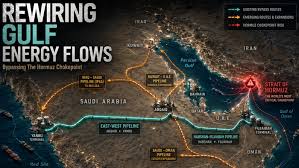
Either way, the interim peace deal appears likely to be signed within the next 48 hours, setting the stage for energy flows through the critical maritime chokepoint to begin normalizing, a process that could take many months.
The broader takeaway is that buyers of crude, refined products, and LNG now have to rethink their sourcing stack after the US-Iran conflict effectively shut Hormuz for several months. That means diversifying supply chains and reducing exposure to single-point maritime chokepoints. For Gulf energy producers, the Hormuz disruption will accelerate a massive push toward alternative export channels that bypass Hormuz entirely, potentially reducing Tehran's ability to use the strait as a lever in future conflicts.
In the first month of the conflict, Saudi Arabia's Hormuz-bypassing East-West pipeline ramped up to its full capacity of 7 million barrels a day, allowing the Kingdom to divert flows from Persian Gulf loading terminals to those at Yanbu on the Red Sea.
Separately, there has been a rush across other Gulf states to identify alternatives to Hormuz, and major plans to begin building new pipeline routes may soon be approaching.
Earlier this month, Sheikh Khaled Ahmad Al-Sabah, managing director of international marketing at Kuwait Petroleum, said Kuwait is among the countries that have reportedly held talks with Saudi Arabia and the United Arab Emirates about potential cross-border pipelines that could connect Gulf oil production to buyers without relying on tanker transits through Hormuz.
New signals from Gulf states seeking to rewire energy flows emerged on Wednesday in a new note citing a top UAE official who said the energy exporter is preparing to have "zero dependence" on Hormuz.
"We're moving toward having zero Hormuz dependency and that's regardless of whether it's open or not," UAE's Minister of Foreign Trade Thani Al Zeyoudi told Bloomberg in an interview. "It's going to open and we hope that will happen quickly, but we will not stop the new plan."
The plan includes major investments in pipelines, rail, and road links from UAE ports in the Persian Gulf to Dibba, Fujairah, Khor Fakkan and at least one new harbor on the Gulf of Oman coast.