










Breaking News
 How Deep Are The Newsoms In It?
 America At 250: Survey Finds Enduring Patriotism, Growing Anxiety
 JUST IN: US and Iran Officially Sign Memorandum of Understanding After Moving Friday Signing...
 "The Situation Has Become Unsustainable": Apple To Hike Prices To Offset Soaring Memory Co
Top Tech News
 Heads up: Apparently the government is hiding cameras inside fake utility boxes
 Sodium Batteries And EVs That Power The Grid: Inside GM's Big Energy Push
 NUCLEAR ENGINE - UNLIMITED LUXURY - 20 YEARS WITHOUT REFUELING
 China Unveils Nuclear-Powered Floating Hub For Green Shipping
 China Launches World's 1st Commercial Brain Chip, Beating Elon Musk's Neuralink!
 Modular next-gen US nuclear reactor goes critical
 How EMF's cause disease
 This Company Will Add Phone, AirPod, and Smartwatch Trackers to License Plate Readers
 Elon Details SpaceX AI Data Center in Space Details and Roadmap
 5-in-1 miniature surgical robot is the size of a seed


DOJ Probes JPMorgan, Bank of America, Over Political Account Closures
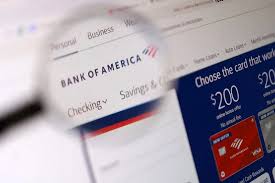
Federal subpoenas hit JPMorgan Chase, Bank of America, and Wells Fargo this week, ordering the banks to name every customer they cut off and to say why.
The legal fight is about fraud statutes and prosecutorial reach. A blunter question sits underneath it. When a bank shuts your account over your politics, where are you supposed to go?
The demands came from the US Attorney's Office in Washington, D.C., run by Jeanine Pirro.
Her prosecutors asked the banks for lists of people who were "debanked" and for the reasons behind shutting them out. Some of the subpoenas reach back more than a year.
The investigation tests whether the account closures violated the Financial Institutions Reform, Recovery and Enforcement Act of 1989, a law built to chase bank fraud.
Debanking amounts to financial exile. A private institution decides your views, or your line of work, make you a liability, and your access to checking accounts, payroll, and credit can vanish.
There's no hearing, no judge, and often no warning beyond a card that stops working. The power to do this sits with the bank, and the person on the other end rarely gets to argue back.
Last August, President Trump signed an executive order telling banking regulators to root out "politicized or unlawful debanking" and to penalize it. The Office of the Comptroller of the Currency later reviewed the nine largest banks and reported it had found early signs of the practice. Pirro's office went further on its own, opening the criminal probe without waiting for a referral from those regulators.
The banks' defense is the one you'd expect. They say they shut accounts only over legal, regulatory, or financial risk, never over belief. That explanation is convenient and hard to check because the standards live inside the banks and the people affected almost never see them. When the threshold for losing your account is "risk" defined by the institution that benefits from defining it loosely, almost any disfavored customer can be folded in.
For the crypto industry, the probe puts a name to a years-old grievance. Digital-asset firms watched their accounts close across 2022 and 2023 and called it "Operation Chokepoint 2.0," a nod to a 2013 Obama-era program that pushed banks to drop industries the government disliked. The pattern repeats because the method works. You don't have to outlaw an activity if you can cut off the money that keeps it alive.
That is the chilling effect in its purest form. People and businesses learn that the wrong affiliation can cost them a bank account, so they grow careful about what they say, fund, or build. The punishment never needs a courtroom to land, and it teaches everyone watching to keep their heads down.