










Breaking News
 BBC Hands Soros-Linked Pro-Migrant Campaigners Direct Access To Shape Children's Show
 Telegram Founder Warns UK Social Media Ban Is Digital Iceberg About To Sink The Free Internet
 No FISA Without SAVE Act: Trump Calls Out 'Dumocrat' Double-Cross," Keeps Pulte As Acti
 Ease In Our Time
Top Tech News
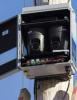 Heads up: Apparently the government is hiding cameras inside fake utility boxes
 Sodium Batteries And EVs That Power The Grid: Inside GM's Big Energy Push
 NUCLEAR ENGINE - UNLIMITED LUXURY - 20 YEARS WITHOUT REFUELING
 China Unveils Nuclear-Powered Floating Hub For Green Shipping
 China Launches World's 1st Commercial Brain Chip, Beating Elon Musk's Neuralink!
 Modular next-gen US nuclear reactor goes critical
 How EMF's cause disease
 This Company Will Add Phone, AirPod, and Smartwatch Trackers to License Plate Readers
 Elon Details SpaceX AI Data Center in Space Details and Roadmap
 5-in-1 miniature surgical robot is the size of a seed


Cutting the Red Tape
For the last couple of years, the EU has been on a mission to make European businesses more competitive through a process it calls "simplification." This means slashing red tape—especially in the form of reporting and compliance obligations—by 25% for all companies, and at least 35% for SMEs. Backed by Germany, Italy, and the Nordic countries, the project is said to have already saved EU companies €15 billion in administrative costs, almost halfway to the €37.5 billion savings goal set by Brussels for 2029.
Europe's deregulation revolution started with a 2024 report by former president of the European Central Bank Mario Draghi. Draghi recommended an overhaul of the EU's regulatory system, as well as increased investment, to enable the bloc to compete on a more equal basis with the US and China. The EU Commission responded last year by unveiling ten "omnibus" packages, each of which targets a specific industry. Coming from an institution that has been infatuated with bureaucracy for most of its history, some of these are surprisingly aggressive: removing 80% of European businesses from the Corporate Sustainability Reporting Directive, for example, and conducting just one on-the-spot check per year of each of the bloc's farms.
For Spain's Socialist prime minister Pedro Sánchez, this is not a liberation for EU businesses, so long entangled by centralized compliance procedures, but a threat to the bloc's stability. Speaking via video link at the EU parliament on June 9, he said: "Some will say that to compete, you must deregulate. Those who say that are often the very same people who [led] the world into the financial crisis with that same regime." Sánchez claimed that the real question was not "about having more or fewer laws or rules," but "having good rules and laws"—and that, by implication, the deregulation initiative risks throwing out lots of "good" rules.
But what makes "good" laws in this context? For industry lobbyists and the EU right (which dominates the bloc's parliament), ones that enable companies to grow and innovate, so that they can compete better with China and the US. But for the European left, of which Sánchez has emerged as the unofficial leader, regulation must further Brussels's aim to be the world's first climate-neutral continent by 2050. On the way to that milestone, the EU wants renewables to account for 42.5% of its energy mix by 2030 (currently, that figure is at 25%).
Inspired by the Draghi report, the EU leadership wants to do both. It is convinced that regulatory "simplification" will boost companies' competitiveness as well as their climate credentials, by freeing up more of their budgets to make the technological changes necessary for both. But this seems overly optimistic. To take just one example, there is widespread anger in Europe's agriculture industry at Brussels's environmental regulations, which farmers say severely hamper their competitiveness—especially given the proliferation of cheap imports from South America's Mercosur bloc.
These frustrations have triggered large-scale tractor protests over the last few years, most notably in France, Belgium, and Spain. Yet if the EU expects its climate agenda to be unaffected by a relaxation of compliance regulations within the agriculture sector (as detailed in the relevant omnibus, announced last May), it is surely deluded. This, of course, applies to every other industry too. If increased competitiveness is the priority, then climate goals will have to take second place, at least until 2029.