










Breaking News
 Data Needs Theory to Make Sense
 Pesticides, Cancer and the Supreme Court: 5 Things You Need to Know
 A Good Reason to Leave Your Phone at Home
 Is The War Over (Again)?
Top Tech News
 NUCLEAR ENGINE - UNLIMITED LUXURY - 20 YEARS WITHOUT REFUELING
 China Unveils Nuclear-Powered Floating Hub For Green Shipping
 China Launches World's 1st Commercial Brain Chip, Beating Elon Musk's Neuralink!
 Modular next-gen US nuclear reactor goes critical
 How EMF's cause disease
 This Company Will Add Phone, AirPod, and Smartwatch Trackers to License Plate Readers
 Elon Details SpaceX AI Data Center in Space Details and Roadmap
 5-in-1 miniature surgical robot is the size of a seed
 Every hard drive you own will die.
 Flying car industry turns to solid-state batteries for commercial takeoff



Why Off-Grid Solar Suddenly Makes Instant Sense
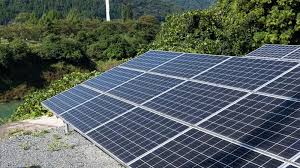
I'll be the first to admit it: I spent years mocking early electric vehicles. The early models had laughable range, charging took hours, and battery replacement costs could total the car. When I first heard about people planning cross-country trips in a Nissan Leaf, I thought they were insane. And I was right -- for that era. The technology simply wasn't ready.
But here's what changed: I'm currently hauling solar panels, rack-mountable lithium iron phosphate batteries, and a high-voltage inverter to my studio in Central Texas, preparing to build a full off-grid power system that I'll demonstrate on camera. I've spent the last several months researching battery chemistry, solar controller specs, and load calculations because suddenly things have changed. The Eastern Power Grid is projected to run out of emergency peak power by June 2027, and PJM Interconnection -- serving 67 million people -- is heading for catastrophic failure, largely due to increasing data center demand for power .
That's not a theory; that's a Goldman Sachs projection. Meanwhile, battery chemistry improvements and manufacturing economies of scale have finally produced vastly superior batteries with a 10+ year usage life, priced affordably. The combination of grid fragility and battery maturity has forced me to change my course and build my own system to bypass fossil fuels and an eroding domestic power grid.
The Battery Breakthrough That Makes Solar Viable
The real game-changer is battery technology. For decades, off-grid solar meant maintaining flooded lead-acid batteries that needed distilled water and offered barely 500 cycles. Now, lithium iron phosphate (LFP) batteries deliver thousands of cycles, tolerate high temperatures, and are rack-mountable in standard server cabinets. The Preppers Total Grid Failure Handbook notes that AGM batteries were already a step up from flooded cells, priced at $450 for 415 amp-hours, but they still had limitations . Today's LFP batteries blow those out of the water in price, performance, energy density and charge/discharge cycles.
What's even more exciting is the arrival of sodium-ion chemistry. I have been following this for years and made it clear: I would only buy an EV when sodium-ion became viable. Gotion High-Tech just launched its Gnascent sodium-ion brand with gigawatt-hour-scale production lines already running in Tangshan and Hefei, with mass production reportedly starting in late 2026. Sodium-ion batteries are inherently safer than lithium, and researchers have developed high-entropy cathodes that retain nearly 84 percent capacity after 250 rapid cycles . The era of cheap, durable, fire-safe storage is here, and it makes off-grid solar not just possible but practical.