










Breaking News
 What Comes After Thomas Massie? Meet Jose Vega
 "They will vaccinate you with DNA while you're not looking" Dr. McCullough exposes new
 'Personal chemistry' keeps U.S.-Russia reset alive as Putin-Trump bond defies 'backtrack
 Bright Videos News, June 12, 2026 - We Are Trapped in Trump's Time Loop Paradox:
Top Tech News
 NUCLEAR ENGINE - UNLIMITED LUXURY - 20 YEARS WITHOUT REFUELING
 China Unveils Nuclear-Powered Floating Hub For Green Shipping
 China Launches World's 1st Commercial Brain Chip, Beating Elon Musk's Neuralink!
 Modular next-gen US nuclear reactor goes critical
 How EMF's cause disease
 This Company Will Add Phone, AirPod, and Smartwatch Trackers to License Plate Readers
 Elon Details SpaceX AI Data Center in Space Details and Roadmap
 5-in-1 miniature surgical robot is the size of a seed
 Every hard drive you own will die.
 Flying car industry turns to solid-state batteries for commercial takeoff



Qatar Tried Secret Deal-Making With Iran To Protect World's Largest Gas Complex
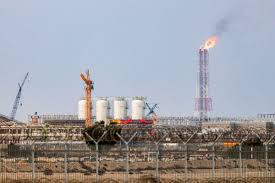
The Washington Post has just provided some new information which has come to light, writing that "There was an additional, hidden consequence. The strike also dashed secret efforts by Qatar to keep its gas complex, known as Ras Laffan, off Iran's target list, according to Middle Eastern security officials and Western officials briefed on the intelligence."
This after the punishing Iranian strikes (against a nearby Arab state which hosts US forces) "destroyed sections of a plant that provides nearly a fifth of the globe's gas supply, imperiled multibillion-dollar contracts with China and other clients, and damaged the prospects of finding an earlier end to the war by dragging Qatar, a key mediator between the United States and Iran, into the fight" - WaPo also reviewed.
That 'secret negotiations' were being held apart from the US - or also separately from other Gulf Cooperation Council (GCC) states is indeed significant, highlighting a theme that Tehran continues to seek to assert leverage by forcing nations to come make side deals - even as the Islamic Republic comes under US bombs and Western pressure.
If it is indeed accurate that Gulf nations are approaching Iran to do individual separate deals, this is for now a diplomatic 'win' for Tehran. Separate deal-making, peeling others away from a united front and bloc, gives Iran some greater leverage and also flexibility in terms of potential post-war economic and political detente with regional states.
The UAE, it was reported earlier this week in Bloomberg, has also reportedly reached its own 'understanding' with the Iranians after some backroom dealing and diplomacy.
"Senior national security officials from the United Arab Emirates and Iran held a face-to-face meeting for the first time since the start of the US-Israeli war against Tehran, according to people with knowledge of the situation," Bloomberg reported
"This week's meeting marked a stark turnaround for both sides and comes amid their growing acknowledgment of the importance of calmer bilateral ties, the people said, asking not to be named discussing sensitive matters," the report indicated.
Perhaps in both Qatar's and UAE's thinking, there's too much to risk while facing Iran's significant ballistic missile and drone arsenal, at a moment Washington has failed to clearly define an end game, but instead is climbing up the escalation ladder with a cornered and thus fierce Iran, which sees itself fighting for its very survival.