










Breaking News
 "Iran Was Our Best Ally in the Middle East" - Former Combat Pilot
 Is AIPAC Influencing U.S. Policy? Michael T. Lester Questions Congressional Priorities
 From Fatal Conceit to the Friendly Skies: How Deregulation Made Flight Affordable
 Taiwan's KMT offers US an off-ramp from war with China
Top Tech News
 Researchers Turn Car Battery Acid and Plastic Waste into Clean Hydrogen and New Plastic
 'Spin-flip' system pushes solar cell energy conversion efficiency past 100%
 A Startup Has Been Quietly Pitching Cloned Human Bodies to Transfer Your Brain Into
 DEYE 215kWh LiFePO4 + 125,000W Inverter + 200,000W MPPT = Run A Factory Offgrid!!
 China's Unitree Unveils Robot With "Human-Like Physique" That Can Outrun Most People
 This $200 Black Shaft Air Conditions Your Home For Free Forever -- Why Is It Banned in the U.S.?
 Engineers have developed a material capable of self-repairing more than 1,000 times,...
 They bypassed the eye entirely.
 The Most Dangerous Race on Earth Isn't Nuclear - It's Quantum.
 This Plasma Stove Cooks Hotter Than The Sun


The Middle Corridor Emerges As A Strategic Lifeline For Global Trade
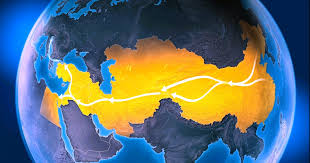
The World Bank described the Middle Corridor back in 2023 as a strategically important but structurally constrained route. While geopolitical fragmentation, driven in part by Russia's war in Ukraine, has increased the demand for alternative corridors, the World Bank emphasized that the corridor's long-term viability requires coordinated investment, the removal of infrastructure bottlenecks, and improved cross-border customs and transport procedures.
To address these roadblocks, the World Bank and its partners on April 14–15 committed $3.3 billion to strengthening key missing links along the corridor, including $1.9 billion for Turkey's Istanbul North Rail Crossing and a $1.4 billion investment in the reconstruction of Kazakhstan's Karagandy–Zhezkazgan highway.
On the same day that this was announced, Turkish Vice President Cevdet Y?lmaz underscored the importance of such investment at a meeting in Astana.
"The Northern Corridor [through Russia] has become unpredictable due to geopolitical tensions. The southern route is pushing the limits of its capacity," he said.
"This situation has made the Middle Corridor not an alternative but a mandatory choice."

Dosym Satpayev, director of the Risk Assessment Group in Almaty -- an independent think tank analyzing political risks, corruption, and foreign policy processes in the region -- says that Russia's war in Ukraine and the resulting sanctions deepened global dependence on maritime chokepoints such as the Strait of Hormuz. but the current crisis has potentially long-term consequences for global trade.
"Even if the Strait of Hormuz is reopened, I believe that the image of it as a stable transport and logistics route has been damaged for many years, if not permanently," Satpayev said.
"The same applies to the stereotype that the Persian Gulf and Middle Eastern countries can guarantee stable supplies of energy resources and other goods through the Strait of Hormuz."
Uncertainty is already reshaping global pricing and trade behavior, he added, saying that a "risk premium" will most likely be embedded in prices of oil and nitrogen fertilizers.
"About 25–35 percent of global fertilizer supplies pass through the Strait of Hormuz, and this will inevitably be reflected in final prices. Therefore, many countries will seek to diversify routes regardless of how the situation develops. Most likely, instability will persist for a long time, which means risks will remain high. And this is bad for business, because business needs predictability."