










Breaking News
 Warrantless Surveillance Needs to Stop! A Call to Action
 "Iran Was Our Best Ally in the Middle East" - Former Combat Pilot
 Is AIPAC Influencing U.S. Policy? Michael T. Lester Questions Congressional Priorities
 From Fatal Conceit to the Friendly Skies: How Deregulation Made Flight Affordable
Top Tech News
 Researchers Turn Car Battery Acid and Plastic Waste into Clean Hydrogen and New Plastic
 'Spin-flip' system pushes solar cell energy conversion efficiency past 100%
 A Startup Has Been Quietly Pitching Cloned Human Bodies to Transfer Your Brain Into
 DEYE 215kWh LiFePO4 + 125,000W Inverter + 200,000W MPPT = Run A Factory Offgrid!!
 China's Unitree Unveils Robot With "Human-Like Physique" That Can Outrun Most People
 This $200 Black Shaft Air Conditions Your Home For Free Forever -- Why Is It Banned in the U.S.?
 Engineers have developed a material capable of self-repairing more than 1,000 times,...
 They bypassed the eye entirely.
 The Most Dangerous Race on Earth Isn't Nuclear - It's Quantum.
 This Plasma Stove Cooks Hotter Than The Sun


Taiwan's KMT offers US an off-ramp from war with China
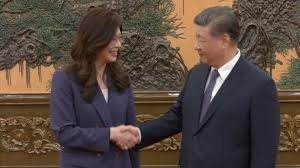
Amid all the tensions in the Middle East, the situation in East Asia looks a lot calmer. That's especially true after a visit to Beijing by Taiwan's opposition leader Cheng Li-wun, a positive sign for peace and an encouraging step toward Washington's longstanding interest in peaceful cross-strait relations.
Cheng's visit to China was not unprecedented. The opposition party in Taiwan, the Kuomintang (KMT), has held several rounds of direct talks with Beijing in a "party-to-party" format since 2005.
It would be better if the leader of Taiwan, Lai Ching-te of the Democratic Progressive Party (DPP), had made the journey, but he is unfortunately reviled by Beijing due to his pro-independence inclinations.
Still, even a visit by the opposition party can't be discounted. The cross-strait situation has become so fraught to the point that U.S. intelligence agencies once predicted that a war there could occur as early as 2027. This estimate has thankfully been dialed back.
Many experts regard the Taiwan Strait as the world's most dangerous powder keg. Any step toward peace in that volatile situation is welcome.
The trip carried deep meaning. Cheng stayed in China for a whole week and took in Nanjing, the highly symbolic city on her way to Beijing. Nanjing is famous in modern Chinese history not only for the heinous Japanese massacre of hundreds of thousands of Chinese innocents but also as the historical capital of the Republic of China, which is the official name Taiwan's government uses.
Nanjing is also the site of the Sun Yat-sen mausoleum, sacred for cross-strait relations since Sun, an American-educated medical doctor and founding father of modern China, is deeply revered in both Taipei and Beijing.
I have visited this memorial myself and it's extraordinary to behold Taiwan's national flag, the white sun on a blue field, above the crypt in the middle of this bustling Chinese city. Sun's portrait hangs very prominently in Taiwan's legislature to this day.
Cheng met with Chinese President Xi Jinping during her trip, where Xi stated: "Taiwan compatriots have never forgotten that their roots are on the mainland," adding that their "Chinese roots… come from our bloodlines, are grounded in history, and are etched in our hearts. They can never be forgotten, nor can they ever be erased."
Notably, Xi did not insist on near-term unification, instead stating that the tendency of "both sides of the Strait becoming closer, more connected, and coming together will not change."