










Breaking News
 Warrantless Surveillance Needs to Stop! A Call to Action
 "Iran Was Our Best Ally in the Middle East" - Former Combat Pilot
 Is AIPAC Influencing U.S. Policy? Michael T. Lester Questions Congressional Priorities
 From Fatal Conceit to the Friendly Skies: How Deregulation Made Flight Affordable
Top Tech News
 Researchers Turn Car Battery Acid and Plastic Waste into Clean Hydrogen and New Plastic
 'Spin-flip' system pushes solar cell energy conversion efficiency past 100%
 A Startup Has Been Quietly Pitching Cloned Human Bodies to Transfer Your Brain Into
 DEYE 215kWh LiFePO4 + 125,000W Inverter + 200,000W MPPT = Run A Factory Offgrid!!
 China's Unitree Unveils Robot With "Human-Like Physique" That Can Outrun Most People
 This $200 Black Shaft Air Conditions Your Home For Free Forever -- Why Is It Banned in the U.S.?
 Engineers have developed a material capable of self-repairing more than 1,000 times,...
 They bypassed the eye entirely.
 The Most Dangerous Race on Earth Isn't Nuclear - It's Quantum.
 This Plasma Stove Cooks Hotter Than The Sun


From Fatal Conceit to the Friendly Skies: How Deregulation Made Flight Affordable
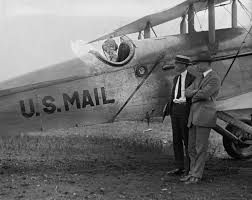
The economic history of commercial airline flight began with courageous pilots and entrepreneurs in the American West. They could hardly have imagined the proliferation of the industry and its low relative costs, safety, and frequent use among Americans of all income levels and backgrounds.
A century ago, Varney Air Lines took flight with a mail delivery that departed Pasco, Washington, headed for Boise, Idaho. Founded by Walter T. Varney (pictured below), who was a part of the US Signal Corps in World War I, the fledgling operation obtained the first airmail contract in 1925 from the US Postal Service.
Varney's chief pilot was Dewey "Lee" Cuddeback who guided a Laird Swallow biplane from Pasco to Boise in just under three hours, safely landing before a crowd of around two thousand onlookers with 207 pounds of mail in tow. After refueling, he delivered more mail to Elko, Nevada finishing just shy of four-and-a-half hours in the sky. This feat took less than a tenth of the time that traditional railway transport would have taken to deliver the mail and represented an incredible reduction in delivery time.
Later that day, a second pilot, Franklin Rose, ended his flight in a less auspicious way. His leg from Elko to Boise terminated in an emergency landing in a mud-soaked grain field just north of the Nevada-Idaho state line. While Rose walked away unharmed after being blown off course by over sixty miles, the aircraft remained stuck in the mire, bringing an end to the day's second round of flights. Despite that unfortunate outcome, the stage was being set for modern passenger flight. Four years later, Varney Air Lines was acquired by United Aircraft and Transport Corporation; in 1934 it merged with several other air transport firms to form United Airlines.
The early years of American flight were filled with these harrowing stories of innovation, safety improvements, and rivalrous competition. Through it all, efficiency, safety, and costs improved. One such innovator was Archie League, whose innovations in ground signalling and radio communications paved the way for ever-safer passenger flight. League's ideas on safety were highly valued in St. Louis, as the flight fever that was spawned by Charles Lindbergh's exploits attracted more and more pilots to America's heartland to test their aviation mettle. As air traffic became busier there, League's safety protocols set the standard for flight safety for takeoffs and landings. Discontented with ground signalling alone, League famously guided a flight bound for St. Louis's Lambert airfield through severe weather and dense fog with calm and concise directions for a safe landing in October of 1929, sparing the lives of all on board.
In the same month as League's radio innovation, economic history would take a turn with Black Tuesday's infamous stock market crash. While the aviation industry was in its infancy, it would soon be smothered by New Deal regulations, preventing the same pace of improvement that had been unleashed by the likes of Varney, League, and Lindbergh. Indeed, the Hoover and FDR administrations delivered an unprecedented rise in the "fatal conceit" of economic planners who attempted to create economic outcomes according to their own wishful thinking. Their restrictions and barriers to entry and exit would do nothing of the sort, and proved to inhibit improvements and price competition in the airline industry for four decades.
With FDR's creation of the Civil Aeronautics Board (CAB) in 1938, its designers claimed that it would centrally administer, "safety-related rulemaking, accident investigation, and economic regulation of commercial airlines." Eventually, it would go far beyond such broad claims and do far more than that, engaging in price-fixing and the prevention of new entrants, just to name a few. Ultimately, the hubris of social engineers led them to declare what "fair" prices were across the airline industry.