










Breaking News
 Taiwan's KMT offers US an off-ramp from war with China
 Petroyuan will mature in bursts of crisis
 The Humble Hauler Is A Cab-Less Autonomous Truck With 200 Miles Of Range
 Lebanon's Recurring Nightmare
Top Tech News
 Researchers Turn Car Battery Acid and Plastic Waste into Clean Hydrogen and New Plastic
 'Spin-flip' system pushes solar cell energy conversion efficiency past 100%
 A Startup Has Been Quietly Pitching Cloned Human Bodies to Transfer Your Brain Into
 DEYE 215kWh LiFePO4 + 125,000W Inverter + 200,000W MPPT = Run A Factory Offgrid!!
 China's Unitree Unveils Robot With "Human-Like Physique" That Can Outrun Most People
 This $200 Black Shaft Air Conditions Your Home For Free Forever -- Why Is It Banned in the U.S.?
 Engineers have developed a material capable of self-repairing more than 1,000 times,...
 They bypassed the eye entirely.
 The Most Dangerous Race on Earth Isn't Nuclear - It's Quantum.
 This Plasma Stove Cooks Hotter Than The Sun


The Global Economy Is Closer to Collapse Than Anyone Wants To Admit
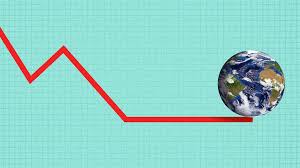
The most destabilizing feature of a systemic shock is often not its immediate violence but the deceptive calm that follows it. Cargo vessels already underway continue to reach their destinations, warehouses continue to dispatch inventory manufactured months earlier, and supermarket shelves remain stocked with goods produced in a previous season under conditions that no longer exist. This temporal inertia creates an illusion of stability at precisely the moment when the foundations of that stability are eroding. In the case of escalating conflict affecting energy infrastructure across the Gulf and maritime passage through the Strait of Hormuz, the world is experiencing this quiet interval between cause and consequence, a period in which daily life appears normal while the logistical arteries of the global system are progressively constricted.
The Strait of Hormuz is not merely a geographic feature but a structural dependency embedded into modern economic life. A significant share of globally traded oil, liquefied natural gas, petrochemical feedstocks, and refined fuels must transit this narrow corridor. The global economy is therefore organized around the assumption that passage through this route will remain uninterrupted, predictable, and secure. Insurance contracts, shipping schedules, refinery throughput, agricultural input planning, and manufacturing procurement cycles all incorporate this assumption. When that assumption is violated, the disturbance propagates outward in complex ways that are not immediately visible to consumers or even to many policymakers. What appears to be a regional disruption is, in practice, a stress event for a system designed around continuous flow.
The first reason the impact is not felt immediately lies in the layered structure of supply chains. Energy commodities are extracted, processed, shipped, stored, refined, transformed into industrial inputs, embedded into manufactured goods, transported again, warehoused, distributed, and finally sold. At each stage, inventories exist that can temporarily mask interruptions upstream. Tankers that departed weeks before escalation continue to arrive. Refineries operate on crude reserves already purchased. Manufacturers draw on stored plastics, chemicals, and packaging materials. Retailers sell goods assembled under prior conditions. This buffering capacity is often interpreted as resilience, yet it is better understood as delay. It postpones the visible manifestation of stress without removing its cause.
The second reason for delayed impact lies in the degree to which modern economies depend on energy not only as fuel but as material. Oil and gas are not simply burned; they are transformed into plastics, synthetic fibers, fertilizers, solvents, coatings, adhesives, and industrial intermediates that form the physical substance of modern life. When energy infrastructure is damaged or shipping lanes are restricted, the effect is not limited to electricity generation or transportation costs. It extends into the availability of packaging, textiles, construction materials, medical supplies, and agricultural inputs. Because these materials are embedded into complex production processes, shortages do not appear as immediate absences but as gradual constraints that slow manufacturing, raise costs, and reduce output over time.