










Breaking News
 Warrantless Surveillance Needs to Stop! A Call to Action
 "Iran Was Our Best Ally in the Middle East" - Former Combat Pilot
 Is AIPAC Influencing U.S. Policy? Michael T. Lester Questions Congressional Priorities
 From Fatal Conceit to the Friendly Skies: How Deregulation Made Flight Affordable
Top Tech News
 Researchers Turn Car Battery Acid and Plastic Waste into Clean Hydrogen and New Plastic
 'Spin-flip' system pushes solar cell energy conversion efficiency past 100%
 A Startup Has Been Quietly Pitching Cloned Human Bodies to Transfer Your Brain Into
 DEYE 215kWh LiFePO4 + 125,000W Inverter + 200,000W MPPT = Run A Factory Offgrid!!
 China's Unitree Unveils Robot With "Human-Like Physique" That Can Outrun Most People
 This $200 Black Shaft Air Conditions Your Home For Free Forever -- Why Is It Banned in the U.S.?
 Engineers have developed a material capable of self-repairing more than 1,000 times,...
 They bypassed the eye entirely.
 The Most Dangerous Race on Earth Isn't Nuclear - It's Quantum.
 This Plasma Stove Cooks Hotter Than The Sun


Petroyuan will mature in bursts of crisis
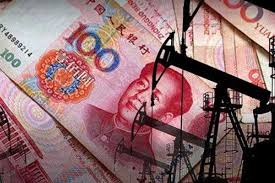
The petroyuan — oil and energy trades settled in Chinese yuan rather than US dollars — is not emerging exclusively because countries want to ideologically hammer the dollar, although that it is inevitably part of it.
It is emerging as a financial force because, under pressure, nations need another way to get deals done. The distinction matters because it will define how the petroyuan evolves relative to the petrodollar.
Most analysis still treats the shift as structural and gradual: a slow erosion of dollar dominance reflected in reserve allocations and payment shares over time. The data, however, do not support that as the primary mechanism.
The dollar still accounts for roughly half of global payments on SWIFT and close to 60% when payments between eurozone members are stripped out. The yuan remains in the low single digits. On foreign reserves, the gap is wider still.
Those numbers are real. But they are also misleading because they describe stability at the core of the system and say very little about what happens at the edge — when the system is under strain.
Energy markets operate at that edge. Around a fifth of global oil supply moves through the Strait of Hormuz, and Asia depends on Middle Eastern crude for roughly half or more of its imports.
When that flow is disrupted, the question is not which currency is dominant. The question is which currency can clear the transaction. This is where the petroyuan comes into the picture.
Recent trades give a clear signal. Indian refiners have already settled Iranian cargoes in yuan under US-sanction-constrained conditions. African banks are building direct yuan settlement channels to avoid routing through the dollar.
These are not ideological moves — they're operational decisions. That is why the petroyuan will not grow in a straight line but rather will gain traction in bursts.
The next phase is likely within the next 12 months. Another disruption to Gulf energy supply — whether through shipping constraints, sanctions tightening or military escalation — will force a portion of marginal oil flows outside long-term contracts and established supply chains into alternative settlement channels.
In that scenario, yuan usage will spike — not across the board, but enough to register in flows and pricing behavior.
It will then likely fade as tensions ease, dollar channels reopen and liquidity returns. The incentive to use the petroyuan's alternative routes will decline and yuan settlement activity will pull back. On the surface, it will look like nothing has changed. That reading will be wrong.
Each episode will leave residue. More counterparties will be willing to transact in yuan. More banks will be able to intermediate in the Chinese currency. More corporates will be comfortable holding working balances in yuan. The infrastructure for petroyuan trading will expand quietly in the background.