










Breaking News
 Department Of War In Talks With Automakers To Build More Weapons
 Former California boom town with population of just 30 begs for young people to move in...
 Humiliating real reason Erika Kirk pulled out of JD Vance Turning Point USA event...
 Dead Los Alamos chief's secret UFO files revealed in stunning drop: '100% proof'
Top Tech News
 The Most Dangerous Race on Earth Isn't Nuclear - It's Quantum.
 This Plasma Stove Cooks Hotter Than The Sun
 Energy storage breakthrough traps sunlight in a molecule
 Steel rebar may have met its match – in the form of wavy plastic
 Video: Semicircular wings give Cyclone VTOL a different kind of lift
 After 20 Years, Wave Energy Finally Works
 FCC Set To "Supercharge" Starlink Space Internet With "Seven-Fold More Capacity"
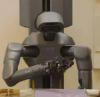 'World's First' Humanoid Robot For Real Household Chores Launched With 16-Hour Battery
 XAI Training 10 Trillion Parameter Model – Likely Out in Mid 2026
 The $7 Powder That Beats Your $5,000 AC Unit!



Prices For Physical Oil And Fertilizer Go Absolutely Nuts As A "Summer Of Shortages"...

Most people out there still seem to believe that the war in the Middle East will rapidly come to a conclusion and economic conditions will return to normal soon. Meanwhile, the price of physical oil is going absolutely nuts, the price of fertilizer is going absolutely nuts, and we are being warned that a "summer of shortages" is looming on the horizon if the Strait of Hormuz remains closed. What we are going to be facing in the months ahead very much depends upon the duration of the war. Unfortunately, as you will see below, it does not appear that a peace deal with Iran is going to happen any time soon.
Brits are being braced for a summer of shortages with warnings that chicken and pork are among a swathe of products at risk from the Iran war.
We have never seen a "summer of shortages" in the western world.
So most of us have no idea what that would look like.
According to the BBC, in a "worst case scenario" there could actually be shortages of chicken and pork in the months ahead…
The UK could face food shortages, including chicken and pork, by the summer if the Iran war continues, in a worst case scenario drawn up by government officials.
A government source told the BBC it was planning for a scenario which would involve the continued closure of the Strait of Hormuz and breakdowns in the supply of carbon dioxide (CO2), which is used in the slaughter of some animals and in food preservation.
A spokesperson from the Department for Environment, Food & Rural Affairs said it would continue to work closely with businesses to tackle the impact of the war.
Hopefully a worst case scenario will not materialize.
But right now the Iranians seem to be in no mood to release the stranglehold that they have on the Strait of Hormuz.
As a result, there could be widespread shortages of jet fuel in Europe in just six weeks…
Europe may have just six weeks left of jet fuel, with serious consequences for the continent's economy, the International Energy Agency warned on Thursday.
"Several European countries may start to face shortages of jet fuel in the next 6 weeks, depending how much they are able to import from international markets to replace the lost supply from the Middle East, which accounted for 75% of Europe's net imports of jet fuel previously," the IEA told CNBC in an emailed statement.