










Breaking News
 Del Bigtree: An Inconvenient Study
 President's Council of Advisors on Science and Technology
 Claims are circulating online that Larry Silverstein has opened a terrorism insurance policy...
 The Greatest Theft in Human History! The Banks and Government Are Stealing $3.5 Million...
Top Tech News
 We Build and Test Microwave Blocking Panels - Invisible to Radar
 Man Successfully Designs mRNA Vaccine To Treat His Dog's Cancer
 Watch: Humanoid robot gets surprisingly good at tennis
 Low-cost hypersonic rocket engine takes flight for US Air Force
 Your WiFi Can See You. Here's How.
 Decentralizing Defense: A $96 Guided Rocket Just Put Precision Warfare into the Hands of the People
 Israel's Iron Beam and the laser future of missile defense
 Scientists at the Harbin University of Science and Technology have pioneered a sophisticated...
 Researchers have developed a breakthrough "molecular jackhammer" technique...
 Human trials are underway for a drug that regrows human teeth in just 4 days.



Del Bigtree: An Inconvenient Study
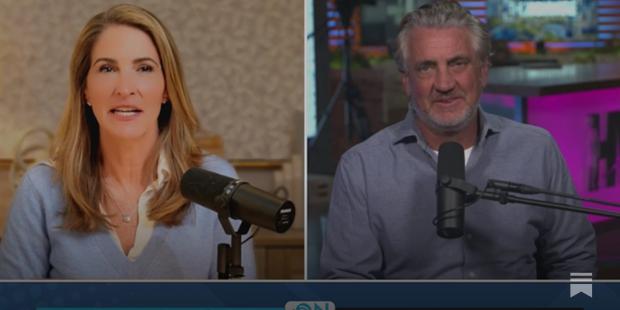
The documentary An Inconvenient Study, produced by Del Bigtree and the Informed Consent Action Network (ICAN), centers on an unpublished retrospective birth cohort study conducted by researchers at Henry Ford Health System, led by Dr. Marcus Zervos, head of infectious diseases. Completed around 2020, the study compared health outcomes in vaccinated and unvaccinated children using existing medical records from the institution, which had previously run Moderna COVID-19 vaccine trials and maintained a pro-vaccine stance.
Bigtree recounts initiating contact with Dr. Zervos during a 2016 dinner while touring for his earlier film Vaxxed. He challenged Zervos to perform a vaccinated-versus-unvaccinated comparison of all health outcomes, arguing that true scientific integrity required testing such claims from a pro-vaccine perspective to minimize perceived bias from critics. After years of follow-up, Zervos and his team completed the analysis but declined to publish or submit it for peer review. Bigtree alleges this stemmed from fear of career repercussions in a climate hostile to findings questioning vaccine safety.