










Breaking News
 How Close Were Iran Negotiations Before Trump Flipped the Table?
 Peter Schiff: It's Time to Axe Entitlements
 The First Automated Rammed Earth House Building Machine - Form Earth
 We Build and Test Microwave Blocking Panels - Invisible to Radar
Top Tech News
 US particle accelerators turn nuclear waste into electricity, cut radioactive life by 99.7%
 Blast Them: A Rutgers Scientist Uses Lasers to Kill Weeds
 H100 GPUs that cost $40,000 new are now selling for around $6,000 on eBay, an 85% drop.
 We finally know exactly why spider silk is stronger than steel.
 She ran out of options at 12. Then her own cells came back to save her.
 A cardiovascular revolution is silently unfolding in cardiac intervention labs.
 DARPA chooses two to develop insect-size robots for complex jobs like disaster relief...
 Multimaterial 3D printer builds fully functional electric motor from scratch in hours
 WindRunner: The largest cargo aircraft ever to be built, capable of carrying six Chinooks
 RNA Crop Spray: Should We Be Worried?


How Close Were Iran Negotiations Before Trump Flipped the Table?
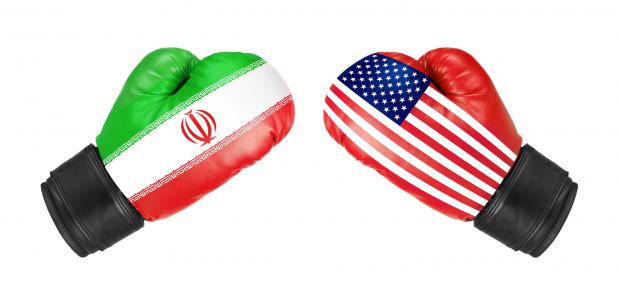
Iran has an "inalienable right" to enrich uranium for civilian use, Iran's foreign minister, Abbas Araghchi, told the U.S. delegation with frustration in the final round of talks before the bombs started to fall on Iran.
And the United States has an "inalienable right" to stop you, Trump's special envoy Steve Witkoff answered with hubris.
Araghchi is right; Witkoff is wrong. Though the U.S. and its partners have presented the public with a war that was caused by Iran's refusal to compromise on its civilian nuclear program, as a signatory to the Nuclear Non-Proliferation Treaty, Iran has "the inalienable right to a civilian program that uses nuclear energy for peaceful purposes."
That Iran was enriching uranium for peaceful purposes has been verified by the multiple consecutive International Atomic Energy Agency (IAEA) reports that followed the JCPOA nuclear agreement with Iran and by the 2022 U.S. Department of Defense Nuclear Posture Review and, most recently, by the 2025 U.S. Annual Threat Assessment.
Despite their "inalienable right," Iran made the major concession of negotiating significant limitations on its nuclear program that could have met U.S. redlines. Instead, the negotiations were interrupted by bombs falling on Iran in an attack that was neither necessitated by the immediate need to defend against an attack nor sanctioned by the Security Council. Negotiations on Iran's legal nuclear program were answered by an illegal war.