










Breaking News
 Grand Theft World Podcast 273 | Goys 'R U.S. with Guest Rob Dew
 Anchorage was the Receipt: Europe is Paying the Price… and Knows it.
 The Slow Epstein Earthquake: The Rupture Between the People and the Elites
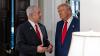 Israeli Prime Minister, Netanyahu will meet with Trump on Wednesday and deliver instructions...
Top Tech News
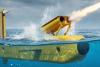 Drone-launching underwater drone hitches a ride on ship and sub hulls
 Humanoid Robots Get "Brains" As Dual-Use Fears Mount
 SpaceX Authorized to Increase High Speed Internet Download Speeds 5X Through 2026
 Space AI is the Key to the Technological Singularity
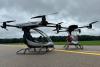 Velocitor X-1 eVTOL could be beating the traffic in just a year
 Starlink smasher? China claims world's best high-powered microwave weapon
 Wood scraps turn 'useless' desert sand into concrete
 Let's Do a Detailed Review of Zorin -- Is This Good for Ex-Windows Users?
 The World's First Sodium-Ion Battery EV Is A Winter Range Monster
 China's CATL 5C Battery Breakthrough will Make Most Combustion Engine Vehicles OBSOLETE



Anchorage was the Receipt: Europe is Paying the Price… and Knows it.

"In Anchorage, we accepted the United States' proposal."
And now, he says, Washington is no longer prepared to implement what it itself put on the table — not on Ukraine, not on expanded cooperation, not even on the implied promise that a different phase of US–Russia relations was possible.
That line matters because it shatters the performance. The offer was real enough for headlines — but not real enough to survive contact with the sanctions machine.
And then he let the contradiction sit there in plain sight — because while Washington was talking about cooperation, its navy and enforcement arms were busy doing something else entirely: tracking, boarding, and seizing oil tankers across oceans.
This is no metaphor — it is literal. In the months following Anchorage, US forces pursued and boarded vessels — most recently the Aquila II, across thousands of miles of open water, part of a widening campaign of maritime interdictions tied to sanctions enforcement. Tankers were chased, boarded, seized, or forced to turn back. At least seven were taken outright. Others fled. This is what "expanded cooperation" looked like in practice.
Lavrov didn't need to raise his voice. The steel already had.
There is zero confusion. It was by design. The apparatus that actually enforces US foreign policy — sanctions, enforcement, energy leverage, financial choke points, and now routine interdiction at sea — does not pivot once engaged.
Even under the illusion of an "America First" presidency, what started as policy under Biden, (sanctions enforcement) now hardens. It builds constituencies, legal inertia, and moral alibis that make reversal look like surrender. Washington can change its language. But the machine keeps moving.
And Europe does more than follow, it leads the public Russophobic hysteria show. Every time.
Europe's Energy Boomerang
The sanctions regime was never a clean moral stand. It was a war-speed demolition and rebuild of Europe's energy system, carried out with ideological fervor and no concern for predictable consequences.
Eurostat calls household electricity prices "stable," which is a neat way of avoiding the obvious: they remain well above pre-2022 levels. The shock didn't pass. It set. Brussels celebrates "diversification," but its own numbers quietly confess the damage: Russian gas cut from roughly 45 percent of EU supply in 2021 to about 13 percent by 2025; oil from 27 percent to under 3 percent; coal erased entirely.
That's anything but adjustment. It's amputation.
Germany — the supposed industrial spine of Europe — now treats energy prices like a security threat. Manufacturing closed out 2025 in deeper contraction, output slipping again as demand thinned. Berlin's response has been nakedly revealing: subsidize the very costs its own policy detonated. Industrial electricity price supports were set to begin in early January (2026). Even projected grid-fee reductions are sold not as success, but as relief — relief from some of the highest power costs on the continent, dependent on state life support.