










Breaking News
 NEW: Former Arizona AG Mark Brnovich Passes Away at 59
 Elon Musk on AGI Timeline, US vs China, Job Markets, Clean Energy & Humanoid Robots | 220
 The Super Silver Squeeze -- Extreme Momentum, Crowds Still Missing It
 US Launches Four More Airstrikes in Somalia as Trump Continues Record-Breaking Bombing...
Top Tech News
 Superheat Unveils the H1: A Revolutionary Bitcoin-Mining Water Heater at CES 2026
 World's most powerful hypergravity machine is 1,900X stronger than Earth
 New battery idea gets lots of power out of unusual sulfur chemistry
 Anti-Aging Drug Regrows Knee Cartilage in Major Breakthrough That Could End Knee Replacements
 Scientists say recent advances in Quantum Entanglement...
 Solid-State Batteries Are In 'Trailblazer' Mode. What's Holding Them Up?
 US Farmers Began Using Chemical Fertilizer After WW2. Comfrey Is a Natural Super Fertilizer
 Kawasaki's four-legged robot-horse vehicle is going into production
 The First Production All-Solid-State Battery Is Here, And It Promises 5-Minute Charging
 Storage doesn't get much cheaper than this


Day 1,419: The Russia-Ukraine Conflict Just Surpassed Soviet War With Nazi Germany
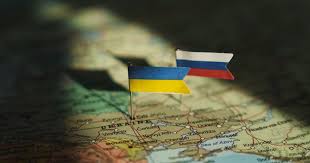
The conflict has just entered its 1,419th day – which means it has officially surpassed the entirety of the historic Soviet campaign against invading Nazi Germany, which lasted 1,418 days from June 1941 to May 1945.
Red Army forces eventually drove Nazi troops back from the Volga River all the way to Berlin, before seizing the German capital. But in today's war, the 1,419th day is just another in a long one in a tragic and grinding war of attrition, where it is believed each side has lost literally hundreds of thousands.
Russia definitely has the upper hand and momentum on the battlefield, but it's been a slow and deadly slog, with The Times of London reporting Monday that despite prolonged combat, Russian advances in the Donetsk region amount to roughly 30 miles from their original positions.
Ukraine's armed forces have in large part been propped up by many billions in weapons, training, and funds poured in by NATO and Western backers of Zelensky.
A recent study by the BBC's Russian service and Mediazona – both largely anti-Putin outfits, found that at least 160,000 Russian soldiers have been killed, but the true figure may be significantly higher. It could also be lower, as Western sources have incentive to exaggerate for propaganda purposes (just as Russia would have incentive to underestimate).
At the same time, most international reports and war monitors say Ukraine's casualties could be many times that figure. On both sides, a whole generation of young men is being wiped out.
Efforts to achieve peace by the Trump administration have so far failed, but at least the lines of communications are still open between Washington and Moscow.
Ukrainian officials have warned that Russian troops are preparing renewed offensives in the north, including areas near the city of Sumy, at a moment the conflict is still only at the legal level of 'special military operation' in the Kremlin's eyes, and not a full state of war which could require societal mobilization.
Over in Ukraine, the war has created the single biggest army in Europe, as recent analysis in The Wall Street Journal detailed:
When the war with Russia eventually ends, Ukraine will be left with a military larger and with more recent experience than any of its European backers'.
Whether it can outlast Russia's long-term designs in the event of any peace deal is a question for the entire continent, which now sees Ukraine as a bulwark against Moscow's ambitions.
Finding the money and personnel to maintain 800,000 troops and piles of equipment while devising new capabilities will be among the Ukrainian government's hardest tasks in the immediate aftermath of the war. European Union leaders recently said they would lend Ukraine 90 billion euros, around $105 billion, fending off a looming cash crunch in Kyiv and helping the Ukrainian army keep fighting as Russian leader Vladimir Putin and Ukrainian President Volodymyr Zelensky compete for President Trump's ear.