










Breaking News
 Here is what we know: U.S. taxpayer money, funneled through USAID and NIH,...
 Empire at 250: Can the Principles of 1776 Survive the American Police State?
 The Public Choice Problem of AI Rights
 Greenspan Was The Perfect Fed Chair. That Is Not a Compliment
Top Tech News
 Speculations on What Could Show Physics Beyond the Standard Model
 SpaceX Orbital Travel and Orbital Hotels Need Starfall – Getting Back Safe and Cheap is Exciting
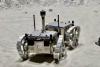 Lizard-inspired wiggly wheels let Mars rover swim through sand
 Fact Sheet: President Donald J. Trump Ushers in the Next Frontier of Quantum Innovation
 Researchers at Johns Hopkins University just let an AI-guided robot remove a dead pig's gallblad
 World's first consumer wing-in-ground effect aircraft takes flight
 America's Military Readiness Depends On Deployable Nuclear Power
 License Plate Cameras Are About To Start Tracking A Lot More Than Just Your Car
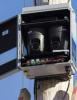 Heads up: Apparently the government is hiding cameras inside fake utility boxes
 Sodium Batteries And EVs That Power The Grid: Inside GM's Big Energy Push



China's thorium reactor aims to fuse power and parity
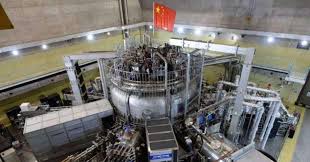
China's thorium-fueled leap could power its Arctic and AI ambitions alike – fusing energy security, technological sovereignty and great power aspirations.
This month, multiple media outlets reported that China has unveiled a world-first thorium-fueled molten salt reactor (TMSR) to power a 14,000-container cargo ship, marking a potential revolution in nuclear maritime propulsion and energy security.
The Shanghai Institute of Applied Physics announced that its two megawatt experimental reactor in Gansu province achieved the first-ever thorium-to-uranium fuel conversion, proving the feasibility of using thorium — a safer, more abundant and non-proliferation-risk element — in molten salt systems.