










Breaking News
 Men Won't Marry? Now Government Is Targeting Cohabitation
 The largest bondholder in the world's second largest bond market is shrinking its book...
 Whistleblower from inside the Obama administration exposes the election fraud cartel,...
 House Passes Resolution Ordering President Trump to End the Iran War
Top Tech News
 Quantum computing may soon become part of the microscope itself.
 Volkswagen Just Unveiled The Most Efficient EV Ever Tested
 NASA Super Light Solar Sail Project Will Be 12-40 Times Lighter and Faster
 Space Telescope Interferometer to Image Exoplanet Continents
 Twenty-five years of "temporary": how 9/11 built a surveillance state Americans never vote
 I'll Never Buy Another WALMART Battery!
 Shoei GT-Air 3 Smart helmet drops with built-in AR for $1,500
 AI Whistleblower Tells Tucker How AI Could Kill All Humans by 2040
 You Hate Flock? Well There's More...
 Will Spiking Diesel Prices Drive Autonomous Trucking?



AI discovers new rare-earth-free magnet at 200 times the speed of man
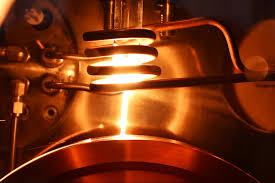
As some entities identify new (or at least overlooked) sources to meet the growing demand for rare earth materials, others are looking toward new tools. UK deep-tech company Materials Nexus announced on Tuesday that it has designed a new rare-earth-free permanent magnet with the help of its AI platform. It says the AI-driven discovery and development process was 200 times faster than the resource-intensive manual route, bringing new hope to an electrifying world with a growing appetite for powerful magnets.
With the world moving away from internal combustion engines and gradually embracing electric mobility, the demand for compact, high-power motors is rapidly rising. By far the most popular option in the automotive industry right now is the permanent magnet motor, which powers upward of 80% of modern electric vehicles.