










Breaking News
 How War Propaganda Justifies Conscription Into Unjust Wars
 Trump's "Russian sanctions" Have Destroyed the German Automobile Industry
 Where are the headlines? 2026 is the 'First Time in 112 Years: No Atlantic Hurricanes By Sept. 2
 CNN Staffers Panic over Paramount Merger: 'Bloodbath Coming,' Newsroom Is 'Like a Funera
Top Tech News
 BEYOND THE MOON: NASA plans a nuclear-powered fleet to push DEEPER into space
 Big Oil Backs Mazama's $135 Million Bet On Superhot Geothermal
 Quantum compass takes flight on Northrop's Lumberjack drone
 Terrifying AI Behavior Even Its Creators Couldn't Explain
 WW3 Near-Miss? AI Hallucinated Nuclear Weapons Components Aboard Chinese Vessel Bound For Iran
 Stripe Is Building the Toll Road for the Machine Economy
 Toyota Dakar hopeful swaps twin-turbo V6 for hydrogen fuel cells
 4-min turbo-inflatable cubic camp castle is now available in the USA
 Researchers Used Claude To Hack OpenAI Employee Accounts
 Chinese Scientists Develop New Oil Refining Method That Cuts Energy Use by 90%



Ultra-Low Power Nonvolatile FeFET Memory
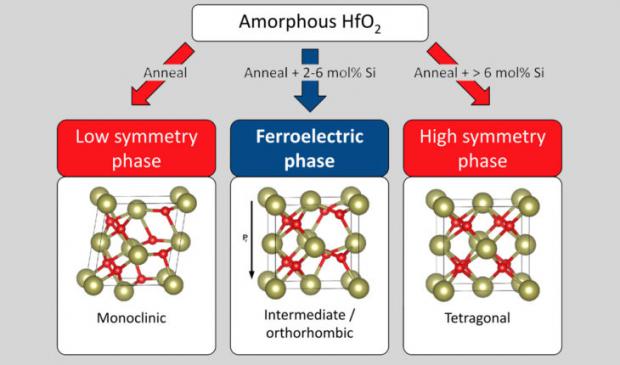
This is energy saving non-volatile memory. They will first have 28nm planar CMOS for consumer applications in 2023 followed by IoT and industrial applications and then by automotive applications.
This will be faster than flash memory. This low-power, non-volatile storage technology is based on crystalline, ferroelectric hafnium oxide that can sit directly beside the processor on a chip.
They will use a thousandth of the electricity previously required for memory. This makes them interesting for installation in cell phones and computer clocks, for example, but also for the mostly battery-operated sensors for the Internet of Things.