










Breaking News
 How War Propaganda Justifies Conscription Into Unjust Wars
 Trump's "Russian sanctions" Have Destroyed the German Automobile Industry
 Where are the headlines? 2026 is the 'First Time in 112 Years: No Atlantic Hurricanes By Sept. 2
 CNN Staffers Panic over Paramount Merger: 'Bloodbath Coming,' Newsroom Is 'Like a Funera
Top Tech News
 BEYOND THE MOON: NASA plans a nuclear-powered fleet to push DEEPER into space
 Big Oil Backs Mazama's $135 Million Bet On Superhot Geothermal
 Quantum compass takes flight on Northrop's Lumberjack drone
 Terrifying AI Behavior Even Its Creators Couldn't Explain
 WW3 Near-Miss? AI Hallucinated Nuclear Weapons Components Aboard Chinese Vessel Bound For Iran
 Stripe Is Building the Toll Road for the Machine Economy
 Toyota Dakar hopeful swaps twin-turbo V6 for hydrogen fuel cells
 4-min turbo-inflatable cubic camp castle is now available in the USA
 Researchers Used Claude To Hack OpenAI Employee Accounts
 Chinese Scientists Develop New Oil Refining Method That Cuts Energy Use by 90%



Kites of Renewable Energy Generate Wind Power By Flying Through The Air
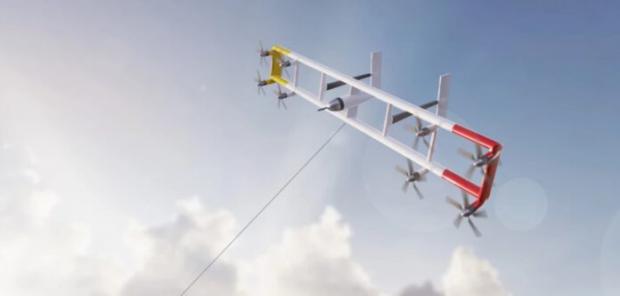
In June, KiteKRAFT hit a major milestone with a 7-foot kite prototype, completing its first figure-8 flight, the motion that will provide the system's wind power.
The kite has small onboard spinning wind turbines, which are essentially act like regular blade tips. It does not need a tower made of hundreds of tons of concrete and steel or a foundation to hold those blade tips in the air, but instead uses smart algorithms to find the best location in mid-air.
Logistics, installation, and inspections are much simpler and the kite can easily reach stronger winds at higher altitudes. "Cost savings of over 50% compared to other sources are possible," says the company on their blog.
Another advantage is that a kiteKRAFT system is hardly visible (no towers and no huge blades), which often elicit public misgivings about such structures in their landscape.
"We are proud that we came to this point in just over one year after company foundation," says the co-founder & CTO Florian Bauer.