










Breaking News
 'UNFAIR': Mamdani's city-run grocer plan SLAPPED with lawsuit
 Trump Says If Iran Had a Nuclear Weapon, He Would Have Politely Called the Supreme Leader...
 Tucker Carlson: We are on the brink of a world war that ends with the use of nuclear weapons
 Who is trying to destroy the United States and the world?
Top Tech News
 NASA Super Light Solar Sail Project Will Be 12-40 Times Lighter and Faster
 Space Telescope Interferometer to Image Exoplanet Continents
 Twenty-five years of "temporary": how 9/11 built a surveillance state Americans never vote
 I'll Never Buy Another WALMART Battery!
 Shoei GT-Air 3 Smart helmet drops with built-in AR for $1,500
 Freezable titanium plate keeps your cooler chilled way longer than ice packs
 Review: Affordable thermal device is made for discovering life outdoors
 AI Whistleblower Tells Tucker How AI Could Kill All Humans by 2040
 You Hate Flock? Well There's More...
 Will Spiking Diesel Prices Drive Autonomous Trucking?



OXIS Energy Li-S Cells: Almost At 500 Wh/kg, New Target 600 Wh/kg
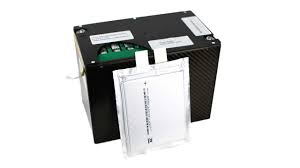
OXIS Energy, the well-known lithium-sulfur (Li-S) battery cell developer from the UK, announced this week that is close to achieving an energy density of 500 Wh/kg.
The company said that it has successfully tested its cell prototypes at 471 Wh/kg, and is confident in achieving 500 Wh/kg within 12 months.
Currently, OXIS Energy supplies its customers from Europe, the USA and Japan (on a relatively low scale we guess) with battery cells rated at 400 Wh/kg. The main general problem with Li-S over the years was their low life cycle.
"Consistently shipping cells at 400Wh/kg to its clients in Europe, the USA and Japan, OXIS is collaborating with major European chemical partners to develop an advanced lithium metal protection mechanism to ensure a significant improvement in the Lithium Sulfur (Li-S) life cycle."