










Breaking News
 15 Years After Occupy, the Case Against the System Has Never Been Clearer
 8 Prepper Hacks for Cleaning Without Running Water
 The Economy Is Stagnating
 Britain To Appoint A Dedicated Tax Agent To Every Single Billionaire
Top Tech News
 Tesla Model 3 killer charges from 10 to 97% in just 9 minutes
 World-first unpowered DNA computer sets speed record
 I Power 5 Buildings Off-Grid. Here's How
 The US government is pushing hard to get a working nuclear fission reactor into space by late 2028
 SpaceX Starmind AI in Space Radiator
 China Will Dominate Global Nuclear Energy Through 2035, Analyst Says
 These Absolutely Wild-Looking EVs Are Saudi Arabia's First Homegrown Cars
 BEYOND THE MOON: NASA plans a nuclear-powered fleet to push DEEPER into space
 Big Oil Backs Mazama's $135 Million Bet On Superhot Geothermal
 Quantum compass takes flight on Northrop's Lumberjack drone


Tesla Next Generation Lithium Batteries vs Solid State Batteries from Everyone Else
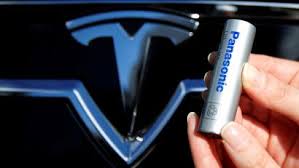
Almost all car and truck makers are betting next-generation batteries will be solid state batteries except Tesla which is betting on dry electrode battery technology.
Tesla is also developing the advanced lithium ion batteries of Dalhousie University battery expert Jeff Dahn. Dahn has lithium ion batteries pouch cells in the lab that can outperform solid-state batteries.
Nature Energy – Long cycle life and dendrite-free lithium morphology in anode-free lithium pouch cells enabled by a dual-salt liquid electrolyte
Cells with lithium-metal anodes are viewed as the most viable future technology, with higher energy density than existing lithium-ion batteries. Many researchers believe that for lithium-metal cells, the typical liquid electrolyte used in lithium-ion batteries must be replaced with a solid-state electrolyte to maintain the flat, dendrite-free lithium morphologies necessary for long-term stable cycling. Here, we show that anode-free lithium-metal pouch cells with a dual-salt LiDFOB/LiBF4 liquid electrolyte have 80% capacity remaining after 90 charge–discharge cycles, which is the longest life demonstrated to date for cells with zero excess lithium. The liquid electrolyte enables smooth dendrite-free lithium morphology comprised of densely packed columns even after 50 charge–discharge cycles. NMR measurements reveal that the electrolyte salts responsible for the excellent lithium morphology are slowly consumed during cycling.