










Breaking News
 Iran Is Watching Its Economy Collapse in Real Time
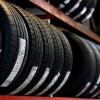 California's New Tire Rule will Result in Higher Costs and More Highway Deaths
 Covid Was a Praxeological Test. Too Many Libertarians Failed.
 This Is What A "Perfect Storm" Looks Like:
Top Tech News
 Tesla Model 3 killer charges from 10 to 97% in just 9 minutes
 World-first unpowered DNA computer sets speed record
 I Power 5 Buildings Off-Grid. Here's How
 The US government is pushing hard to get a working nuclear fission reactor into space by late 2028
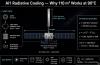 SpaceX Starmind AI in Space Radiator
 China Will Dominate Global Nuclear Energy Through 2035, Analyst Says
 These Absolutely Wild-Looking EVs Are Saudi Arabia's First Homegrown Cars
 BEYOND THE MOON: NASA plans a nuclear-powered fleet to push DEEPER into space
 Big Oil Backs Mazama's $135 Million Bet On Superhot Geothermal
 Quantum compass takes flight on Northrop's Lumberjack drone


Measuring quantum computer reliability
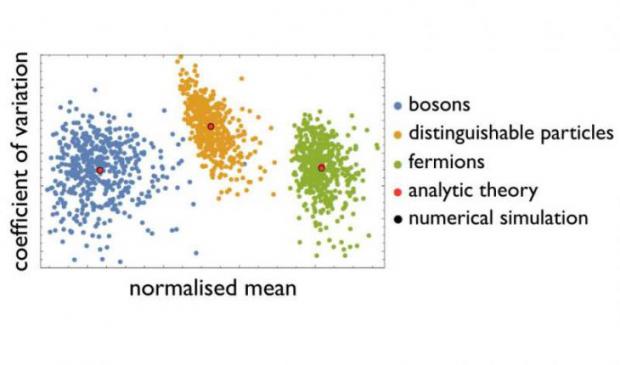
Using that information, they were able to discriminate various particle types and distinctive features of optical arrangements. The team also showed that this distillation process can be improved, drawing upon established techniques of machine learning, whereby physics provides the key information on which data set should be used to seek the relevant patterns. And because this approach becomes more accurate for bigger numbers of particles, the researchers hope that their findings take us a key step closer to solving the certification problem.
Multi-particle interference is an essential ingredient for fundamental quantum mechanics phenomena and for quantum information processing to provide a computational advantage, as recently emphasized by boson sampling experiments. Hence, developing a reliable and efficient technique to witness its presence is pivotal in achieving the practical implementation of quantum technologies.