










Breaking News
 Trump's "Russian sanctions" Have Destroyed the German Automobile Industry
 Where are the headlines? 2026 is the 'First Time in 112 Years: No Atlantic Hurricanes By Sept. 2
 CNN Staffers Panic over Paramount Merger: 'Bloodbath Coming,' Newsroom Is 'Like a Funera
 Tesla Model 3 killer charges from 10 to 97% in just 9 minutes
Top Tech News
 BEYOND THE MOON: NASA plans a nuclear-powered fleet to push DEEPER into space
 Big Oil Backs Mazama's $135 Million Bet On Superhot Geothermal
 Quantum compass takes flight on Northrop's Lumberjack drone
 Terrifying AI Behavior Even Its Creators Couldn't Explain
 WW3 Near-Miss? AI Hallucinated Nuclear Weapons Components Aboard Chinese Vessel Bound For Iran
 Stripe Is Building the Toll Road for the Machine Economy
 Toyota Dakar hopeful swaps twin-turbo V6 for hydrogen fuel cells
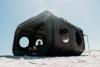 4-min turbo-inflatable cubic camp castle is now available in the USA
 Researchers Used Claude To Hack OpenAI Employee Accounts
 Chinese Scientists Develop New Oil Refining Method That Cuts Energy Use by 90%



World-first unpowered DNA computer sets speed record
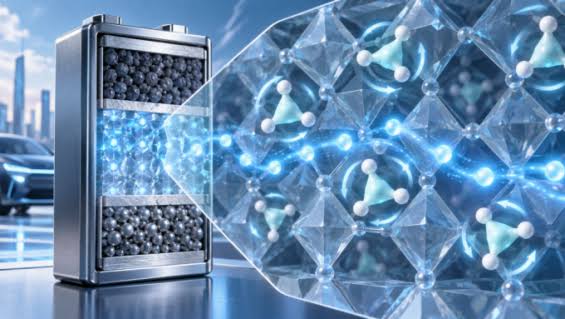
Data centers alone will double their electricity demand within the next few years, making the need for more efficient systems a high priority.
Our own bodies seem like a strange place to look for a solution, but nature has had billions of years to find ways to do a lot with very little. Which is why researchers from Maynooth University in Ireland have turned to the very chemistry of life to develop a novel kind of computer that runs without a constant supply of electricity.
"Silicon-based computers use so much energy – 23% of Ireland's electricity goes into computing and data storage," says computer scientist and senior author Damien Woods. "We've been blinkered by only seeing one type of computer, but there are other examples around us, including our brain."
Virtually all computers we use today rely on switches called transistors, which encode data in the form of on and off states. Manipulating these states to carry out even the simplest of calculations requires a tiny electrical charge.
As small as this current might be, it quickly adds up as countless transistors switch states billions of times per second.
The four chemical units that make up strands of DNA also encode information that can serve as the basis of algorithmic calculations. Instead of switches, the act of computing takes the form of a competition between various sequences.
DNA computing itself is nothing new. In the 1990s, University of Southern California computer scientist Leonard Adleman solved the famous traveling salesman problem using nothing more than strings of nucleotides and biochemistry. Ever since, researchers have found novel ways to program their chemical recipes to meet a range of computational needs.
One remaining challenge is to make a DNA computer that is energetically favorable, stable, reliable, and doesn't require intervening tweaks and top-ups to arrive at a result.
Woods' team considered a slightly different approach, one that has more to do with the emerging science of DNA origami than it does the old-fashioned competition between simple strands.
The process combines a nucleic acid "scaffold" with short segments of DNA in a warm saline solution. As the mixture cools, the lowest energy configuration appears, providing an answer to the problem.
"The molecules interact, form a structure, and that structure is the answer," says Woods. "One key innovation is that the system naturally finds that answer without needing continuous energy inputs."