










Breaking News
 Russia and China have a plan to disable Starlink
 SCARY, DARK, DIRECT, But Is It TRUE? You Decide
 How to Mix and Apply DMSO for Pain Relief
 Do You Know How To Fix Anything? | Victor Davis Hanson #504 | The Way I Heard It
Top Tech News
 Tesla Model 3 killer charges from 10 to 97% in just 9 minutes
 World-first unpowered DNA computer sets speed record
 I Power 5 Buildings Off-Grid. Here's How
 The US government is pushing hard to get a working nuclear fission reactor into space by late 2028
 SpaceX Starmind AI in Space Radiator
 China Will Dominate Global Nuclear Energy Through 2035, Analyst Says
 These Absolutely Wild-Looking EVs Are Saudi Arabia's First Homegrown Cars
 BEYOND THE MOON: NASA plans a nuclear-powered fleet to push DEEPER into space
 Big Oil Backs Mazama's $135 Million Bet On Superhot Geothermal
 Quantum compass takes flight on Northrop's Lumberjack drone


Iran Is Watching Its Economy Collapse in Real Time
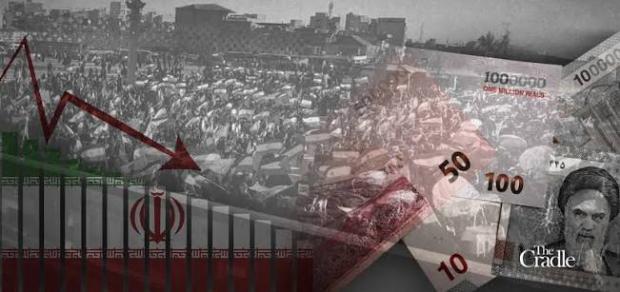
Take oil out of the calculation and the economy still contracted 4.6%. This is not some minor technical recession that economists can explain away with seasonal adjustments. Oil and natural gas activity collapsed 26.4%, industry and mining fell 14.7%, services declined 4.8%, and manufacturing contracted 2.5%. Agriculture was practically the only major sector still moving in the opposite direction, growing 2.3%.
Iran has lived under sanctions for decades, but this is different because the country is now being hit simultaneously by war, collapsing oil revenue, disrupted trade, inflation, currency depreciation, and declining domestic production. That combination is lethal to an economy because each problem feeds the next.
The oil numbers are astonishing. Iranian crude and condensate loadings reportedly fell from around 2 million barrels per day in March to roughly 740,000 barrels per day in July and only about 220,000 to 255,000 barrels per day in August. OPEC data showed Iranian crude production itself dropping by 399,000 barrels per day during August to approximately 2.09 million barrels per day. Oil is not merely another Iranian industry. It is one of Tehran's primary sources of hard currency, which is why restricting those exports strikes directly at the government's ability to finance imports and support the domestic economy.
The people always pay the price before government does. Iran's 12-month average inflation reached 69.9%, while the rial recently traded above 2.2 million to the dollar after being around 1 million only a year earlier. Official unemployment reached 9.1% during the spring, with roughly 450,000 fewer people employed than a year earlier. Average monthly wages reportedly cover less than one-third of basic household expenses. Imagine working every month and discovering that your paycheck covers perhaps ten days of what your family actually needs. That is when people stop believing government statistics because they experience the collapse every time they walk into a market.
This is why currency matters far more than politicians understand. People do not wake up one morning and suddenly decide they hate their government because GDP fell 10.1%. They become angry because their money no longer buys food, savings disappear, medicine becomes unaffordable, electricity becomes unreliable, businesses close and their children cannot find employment. The government can manipulate statistics and blame foreigners all it wants, but it cannot manipulate what someone can afford when they walk into a grocery store.