










Breaking News
 Is Big Pharma Selling Postpartum Depression to New Moms?
 Make Men Men Again: Low T Is Now a National Defense Problem
 Druski: They're Lying To You About Overnight Success!
 $6.27 Diesel Just Hit Harvest. The Grocery Aisle Hasn't Felt It Yet.
Top Tech News
 Tesla Model 3 killer charges from 10 to 97% in just 9 minutes
 World-first unpowered DNA computer sets speed record
 I Power 5 Buildings Off-Grid. Here's How
 The US government is pushing hard to get a working nuclear fission reactor into space by late 2028
 SpaceX Starmind AI in Space Radiator
 China Will Dominate Global Nuclear Energy Through 2035, Analyst Says
 These Absolutely Wild-Looking EVs Are Saudi Arabia's First Homegrown Cars
 BEYOND THE MOON: NASA plans a nuclear-powered fleet to push DEEPER into space
 Big Oil Backs Mazama's $135 Million Bet On Superhot Geothermal
 Quantum compass takes flight on Northrop's Lumberjack drone


Brain power: How one paralyzed man was able to move his arm again
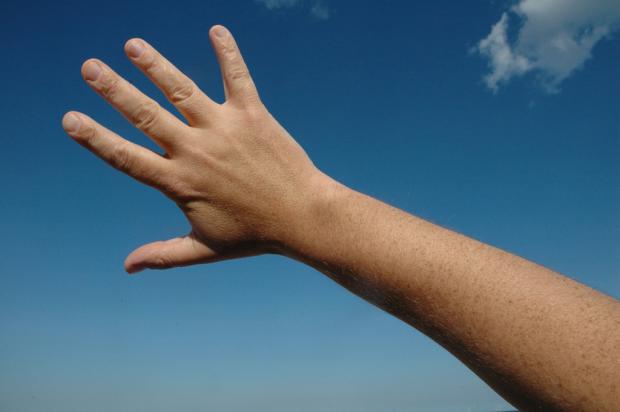
(Natural News) Bill Kochevar, 56, was left paralyzed from the shoulders down after a cycling accident severely injured his spinal cord. In the years since his accident, he had become completely reliant on his caregivers at the Cleveland VA Medical Center. But thanks to the help of a number of Cleveland institutions, the Navy veteran was able to use his right hand and arm for the first time in eight years. Scooping mashed potatoes from a bowl and grasping a cup became possible for Kochevar because of the experimental implant in his brain.
The sensors in Kochevar's motor cortex read and record his thoughts about his arm. These thoughts are then relayed to a computer, and the computer in turn sends these signals to the electrical stimulation system. From there, impulses are directed into the wires implanted in Kochevar's right hand and arm which then perform the desired actions.
It took two years of testing and four months of practice before Kochevar could control his hand and arm. For the Cleveland resident, it was all worth it. "For somebody who's been injured eight years and couldn't move, being able to move just that little bit is awesome to me," Kochevar stated. "I thought, 'Wow, amazing. I can move my arm again'."
The breakthrough that allowed Kochevar to regain some mobility in his arm was undertaken by the Case Western Reserve University, the Cleveland Functional Electrical Stimulation Center, and the University Hospitals Cleveland Medical Center. The clinical trial, BrainGate2, is the result of the combined efforts of these institutions and academics. One of their goals is to examine the possibility of utilizing brain-computer systems to help people suffering from paralysis. With Kochevar's help, they're making that noble goal a reality.
Robert Kirsch, chairman of the Department of Biomedical Engineering at Case Western Reserve University, said that of Kochevar: "He's really breaking ground for the spinal cord injury community. This is a major step toward restoring some independence."
Kochevar himself is more than happy to contribute, having stated, "There are lots of endless possibilities. It's been wonderful and I'm really happy to do this." Though he can only use the technology a few hours each week at a VA Center lab, Kochevar is glad to be able to exercise his hand and arm. Years of disuse have caused his muscles to atrophy. However, he claims to have noticed an improvement in the endurance, range of motion, and strength of his arm.
With movement slowly being restored to his arm, Kochevar is doing more than just regaining use of upper limbs. He's providing hope for the millions of paralyzed people all over the world. In time, the technology Kochevar's using could very well become readily available for the public to use. The exact date for such a remarkable technological leap is unknown. But what is certain is that the only direction to go from here is up.