










Breaking News
 Is Big Pharma Selling Postpartum Depression to New Moms?
 Make Men Men Again: Low T Is Now a National Defense Problem
 Druski: They're Lying To You About Overnight Success!
 $6.27 Diesel Just Hit Harvest. The Grocery Aisle Hasn't Felt It Yet.
Top Tech News
 Tesla Model 3 killer charges from 10 to 97% in just 9 minutes
 World-first unpowered DNA computer sets speed record
 I Power 5 Buildings Off-Grid. Here's How
 The US government is pushing hard to get a working nuclear fission reactor into space by late 2028
 SpaceX Starmind AI in Space Radiator
 China Will Dominate Global Nuclear Energy Through 2035, Analyst Says
 These Absolutely Wild-Looking EVs Are Saudi Arabia's First Homegrown Cars
 BEYOND THE MOON: NASA plans a nuclear-powered fleet to push DEEPER into space
 Big Oil Backs Mazama's $135 Million Bet On Superhot Geothermal
 Quantum compass takes flight on Northrop's Lumberjack drone


Embryo Breakthrough: Artificial Human Life Now Possible In Lab
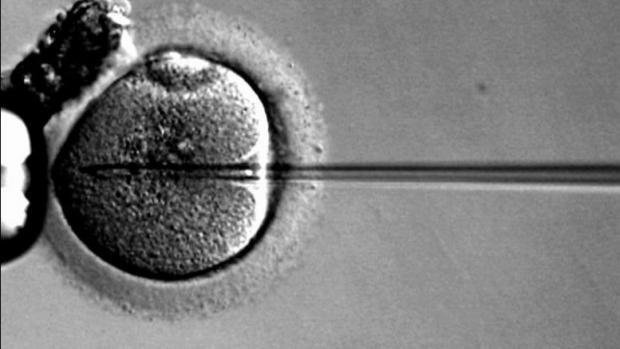
Cambridge University mixed two kinds of mouse stem cells and placed them on a 3D scaffold. After four days of growth in a tank of chemicals designed to mimic conditions inside the womb, the cells formed the structure of a living mouse embryo.
The breakthrough has been described as a 'masterpiece' in bioengineering, which could eventually allow scientists to grow artificial human embryos in the lab without the need for a sperm or an egg.
Growing embryos would help researchers to study the very early stages of human life so they could understand why so many pregnancies fail, but is likely to prove controversial and raise ethical questions about what constitutes human life.
urrently scientists can carry out experiments on leftover embryos from IVF treatments, but they are in short supply and must be destroyed after 14 days. Scientists say that being able to create unlimited numbers of artificial embryos in the lab could speed up research while potentially removing some of the ethical boundaries.