










Breaking News
 'UNFAIR': Mamdani's city-run grocer plan SLAPPED with lawsuit
 Trump Says If Iran Had a Nuclear Weapon, He Would Have Politely Called the Supreme Leader...
 Tucker Carlson: We are on the brink of a world war that ends with the use of nuclear weapons
 Who is trying to destroy the United States and the world?
Top Tech News
 NASA Super Light Solar Sail Project Will Be 12-40 Times Lighter and Faster
 Space Telescope Interferometer to Image Exoplanet Continents
 Twenty-five years of "temporary": how 9/11 built a surveillance state Americans never vote
 I'll Never Buy Another WALMART Battery!
 Shoei GT-Air 3 Smart helmet drops with built-in AR for $1,500
 Freezable titanium plate keeps your cooler chilled way longer than ice packs
 Review: Affordable thermal device is made for discovering life outdoors
 AI Whistleblower Tells Tucker How AI Could Kill All Humans by 2040
 You Hate Flock? Well There's More...
 Will Spiking Diesel Prices Drive Autonomous Trucking?



New Materials Could Turn Water into the Fuel of the Future and puts chemical ...
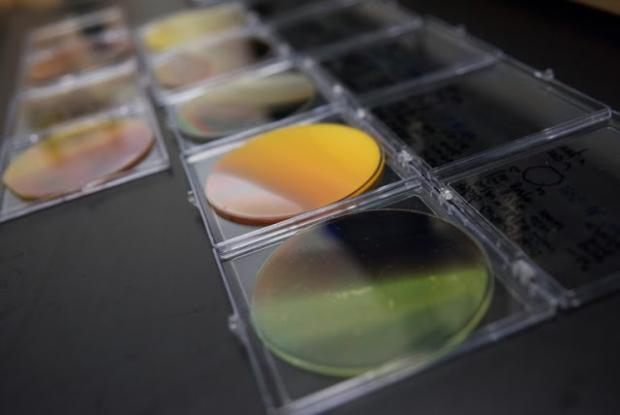
Scientists at the Department of Energy's Lawrence Berkeley National Laboratory (Berkeley Lab) and the California Institute of Technology (Caltech) have—in just two years—nearly doubled the number of materials known to have potential for use in solar fuels.
They did so by developing a process that promises to speed the discovery of commercially viable generation of solar fuels that could replace coal, oil, and other fossil fuels.
Solar fuels, a dream of clean-energy research, are created using only sunlight, water, and carbon dioxide. Researchers are exploring a range of possible target fuels, but one possibility is to produce hydrogen by splitting water.
Each water molecule is comprised of an oxygen atom and two hydrogen atoms. Pure hydrogen is highly flammable, making it an ideal fuel. If you could find a way to extract that hydrogen from water using sunlight, then, you would have a plentiful and renewable energy source. The problem, however, is that water molecules do not simply break down when sunlight shines on them—if they did, the oceans would not cover three-fourths of the planet. Instead, they need a little help from a solar-powered catalyst.
To create practical solar fuels, scientists have been trying to develop low-cost and efficient materials that perform the necessary chemistry using only visible light as an energy source.
Over the past four decades, researchers identified only 16 of these "photoanode" materials. Now, using a new high-throughput method of identifying new materials, a team of researchers led by Caltech's John Gregoire and Berkeley Lab's Jeffrey Neaton, Kristin Persson, and Qimin Yan have found 12 promising new photoanodes.
