










Breaking News
 'UNFAIR': Mamdani's city-run grocer plan SLAPPED with lawsuit
 Trump Says If Iran Had a Nuclear Weapon, He Would Have Politely Called the Supreme Leader...
 Tucker Carlson: We are on the brink of a world war that ends with the use of nuclear weapons
 Who is trying to destroy the United States and the world?
Top Tech News
 NASA Super Light Solar Sail Project Will Be 12-40 Times Lighter and Faster
 Space Telescope Interferometer to Image Exoplanet Continents
 Twenty-five years of "temporary": how 9/11 built a surveillance state Americans never vote
 I'll Never Buy Another WALMART Battery!
 Shoei GT-Air 3 Smart helmet drops with built-in AR for $1,500
 Freezable titanium plate keeps your cooler chilled way longer than ice packs
 Review: Affordable thermal device is made for discovering life outdoors
 AI Whistleblower Tells Tucker How AI Could Kill All Humans by 2040
 You Hate Flock? Well There's More...
 Will Spiking Diesel Prices Drive Autonomous Trucking?



"Rebar graphene" foam supports 3,000 times its own weight
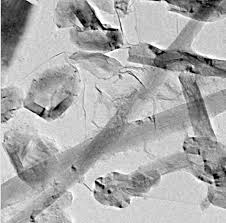
MIT scientists recently developed a 3D version that's 10 times stronger than steel but a fraction of the density, and now a team at Rice University has used carbon nanotubes to reinforce graphene foam. The resulting 3D material can be molded into any shape and supports 3,000 times its own weight before springing back to its original height.
Named for the rebars (reinforcing bars) commonly used to strengthen concrete, Rice's "rebar graphene" is built around carbon nanotubes with several concentric layers. In previous work the team had created three-dimensional graphene foam, and having already used the nanotubes to reinforce regular old 2D graphene, it made sense to combine the two.
"We developed graphene foam, but it wasn't tough enough for the kind of applications we had in mind, so using carbon nanotubes to reinforce it was a natural next step," says James Tour, lead researcher on the study.