










Breaking News
 Is Big Pharma Selling Postpartum Depression to New Moms?
 Make Men Men Again: Low T Is Now a National Defense Problem
 Druski: They're Lying To You About Overnight Success!
 $6.27 Diesel Just Hit Harvest. The Grocery Aisle Hasn't Felt It Yet.
Top Tech News
 Tesla Model 3 killer charges from 10 to 97% in just 9 minutes
 World-first unpowered DNA computer sets speed record
 I Power 5 Buildings Off-Grid. Here's How
 The US government is pushing hard to get a working nuclear fission reactor into space by late 2028
 SpaceX Starmind AI in Space Radiator
 China Will Dominate Global Nuclear Energy Through 2035, Analyst Says
 These Absolutely Wild-Looking EVs Are Saudi Arabia's First Homegrown Cars
 BEYOND THE MOON: NASA plans a nuclear-powered fleet to push DEEPER into space
 Big Oil Backs Mazama's $135 Million Bet On Superhot Geothermal
 Quantum compass takes flight on Northrop's Lumberjack drone


UV light treatments found to slash hospital superbug infections by 30%
(Natural News) The emergence of drug-resistant superbugs is fast escalating into a worldwide crisis. In the U.S. alone, around 23,000 people are killed by superbugs each year, according to statistics from the U.S. Centers for Disease Control and Prevention (CDC).
In September 2016, in a speech to the UN General Assembly, the director of the World Health Organization, Dr. Margaret Chan, said, "Superbugs, resistant to nearly all currently available medicines, already haunt hospitals and intensive care units in every region of the world. Nearly all of us know someone who underwent a routine operation only to die from a hospital-acquired infection." She added the dire warning, "With few replacement products in the pipeline, the world is heading towards a post-antibiotic era in which common infections, especially those caused by gram-negative bacteria, will once again kill." [Emphasis added]
Hospitals are indeed breeding grounds for drug-resistant bacteria. A recent study by researchers from Duke Health, published in the journal The Lancet, may offer new hope, however. Researchers discovered that the addition of disinfecting ultraviolet light (UVC) to certain standard cleaning protocols can cut transmission of superbugs by as much as 30 percent.
The study, which involved 21,000 patients in nine different hospitals in the southeast, was conducted between 2012 and 2014, and focused on the four most resistant organisms: MRSA, vancomycin-resistant enterococci (VRE), C. difficile, and Acinetobacter.
Superbugs tend to linger in the hospital rooms of infected patients even after they have been discharged and their rooms disinfected, leaving future patients vulnerable.
Dr. Deverick Anderson, an infectious disease specialist and the lead investigator for the study, explained that treating these bugs is both tough and expensive, and places an immense burden on affected hospitals.
The trial made use of four different methods to clean the rooms of recently discharged patients infected with one of the four superbugs: 1) cleaning with quaternary ammonium (QA) only; 2) QA followed by UV light; 3) using chlorine bleach only; and 4) cleaning with bleach followed by UV light.
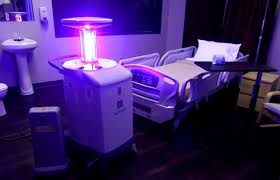
A portable device called the Tru-D SmartUVC was used to dispense the UVC light for 30 minutes in each affected room. The light bounces and reflects off various surfaces, enabling it to target hard to clean areas like open drawers or between cabinets. The UV light kills bacteria by altering its DNA.
The most effective cleaning protocol, especially in fighting MRSA, was the use of QA followed by the UV light.
Around 90 percent of hospitals involved in the study were able to maintain the protocol, even though taking an extra 30 minutes to clean a room means a loss of income for the hospital and places an additional strain on room availability. Having enough of the UVC machines also presented a challenge in some instances.
Researchers stressed that other precautions are also vitally important when it comes to preventing superbug infections, including frequent hand washing between patients and the cautious use of antibiotics. A recent article by Natural News reported, however, that nurses' scrubs and hospital bed rails are often contaminated with superbugs, too, making the problem even more difficult to control.
The overuse of antibiotics for both humans and in agriculture has also escalated the superbug problem dramatically.