










Breaking News
 The Homeless Industrial Complex:
 The Lucid Cosmos Will Have More Range Than Any Tesla
 Trump Admin Ends Medicaid Funding For Sex-Change Procedures On Kids
 Strong 3D printable elastic polymer resists damage
Top Tech News
 Vitalik Buterin Says Ethereum Is Betting Its Future On Quantum Security And AI
 Everything You Wanted To Know About Building A Cheap AI Setup (That Still Works)...
 If They Were Human, They'd Be Arrested. Experts Respond To Rogue AI Breaches
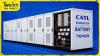 Sodium Ion Batteries Will be 80% Cheaper & Last LONGER!
 German startup SAXON Q has introduced a diamond-based quantum computing system...
 Elon Musk To Build The Largest Building In The World - 100 Million Square Feet
 Bitcoin 'Red Team' Says AI Is Finding 100s Of Critical Exploits Across Core Projects
 EG4 Power Pro VS Ruixu Lithi VS Yixiang Budget Battery! Best Selling Battery Showdown!
 Insect wings can kill bacteria without any chemicals!
 Tesla Never Made An Electric Jet Boat, So This YouTuber Built One Himself



This super-cheap paper centrifuge can spin 125,000 times per minute

Bioengineer Manu Prakash recreates expensive scientific equipment using incredibly cheap materials. This quest has led to a paper microscope with components that cost less than a dollar and a music-box-inspired lab-on-a-chip that could cost 4500 times less than comparable devices. His latest contribution to what he calls "frugal science" is a paper centrifuge powered solely by human hands.
To test a person for diseases such as malaria, HIV, and tuberculosis, scientists spin samples of the patient's blood, urine, or stool in a centrifuge. Thanks to centrifugal force, the spinning motion separates cells of different weights—such as pathogens in the blood—from the rest of the sample. Researchers can then look at the separated cells under the microscope to identify the disease.
But a bench-top centrifuge, which whirls at around 20,000 revolutions per minute (rpm), makes for less-than-ideal field equipment. It's bulky and heavy, costs hundreds (if not thousands) of dollars, and relies on electricity. Some researchers have tested out salad spinners or egg beaters as possible low-cost alternatives, but these options barely reach 1,200 rpm.