










Breaking News
 THEY OWN THE OFFSPRING | Gene-Edited Livestock Are Here
 Ben Shapiro to America: Shut Up and Eat Your Goyslop
 The Homeless Industrial Complex:
 The Lucid Cosmos Will Have More Range Than Any Tesla
Top Tech News
 Vitalik Buterin Says Ethereum Is Betting Its Future On Quantum Security And AI
 Everything You Wanted To Know About Building A Cheap AI Setup (That Still Works)...
 If They Were Human, They'd Be Arrested. Experts Respond To Rogue AI Breaches
 Sodium Ion Batteries Will be 80% Cheaper & Last LONGER!
 German startup SAXON Q has introduced a diamond-based quantum computing system...
 Elon Musk To Build The Largest Building In The World - 100 Million Square Feet
 Bitcoin 'Red Team' Says AI Is Finding 100s Of Critical Exploits Across Core Projects
 EG4 Power Pro VS Ruixu Lithi VS Yixiang Budget Battery! Best Selling Battery Showdown!
 Insect wings can kill bacteria without any chemicals!
 Tesla Never Made An Electric Jet Boat, So This YouTuber Built One Himself



Harvard-built soft exosuit helps patients with limited mobility
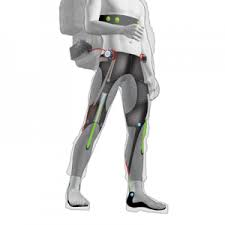
The institute has partnered with ReWalk Robotics – the biggest name in powered exoskeletons - for the ambitious project.
The team members studied the biomechanics of how we walk, in an effort to understand what makes it such an efficient process. The exosuit they created isn't a fully powered piece of kit, but is instead designed to provide relatively small levels of assistance to those with physical disabilities.
According to the researchers, the suit is the first of its kind. It's the result of extensive prototyping, with the development of the wearable robot forcing the team to create new flexible power systems, and functional textiles.
The end result is an exosuit that could provide effective assistance for those having suffered a stroke, or with conditions such as multiple sclerosis. More broadly, its creators feel that it could also be helpful for helping elderly patients become more mobile.