










Breaking News
 US Embassies Across Mideast Are Permanently Reassigning Personnel
 GOA Members Make History With First Suppressor Transfers Without NFA Registration Since 1934
 Common Blood Pressure Drug Recalled Nationwide, FDA Says
 Will AstraZeneca Have to Pay Medical Expenses for Woman Injured During COVID Vaccine Trial?
Top Tech News
 Vitalik Buterin Says Ethereum Is Betting Its Future On Quantum Security And AI
 Everything You Wanted To Know About Building A Cheap AI Setup (That Still Works)...
 If They Were Human, They'd Be Arrested. Experts Respond To Rogue AI Breaches
 Sodium Ion Batteries Will be 80% Cheaper & Last LONGER!
 German startup SAXON Q has introduced a diamond-based quantum computing system...
 Elon Musk To Build The Largest Building In The World - 100 Million Square Feet
 Bitcoin 'Red Team' Says AI Is Finding 100s Of Critical Exploits Across Core Projects
 EG4 Power Pro VS Ruixu Lithi VS Yixiang Budget Battery! Best Selling Battery Showdown!
 Insect wings can kill bacteria without any chemicals!
 Tesla Never Made An Electric Jet Boat, So This YouTuber Built One Himself



Mainstream media finally admits: Adding fluoride to water a 'useless scheme' with no benefit
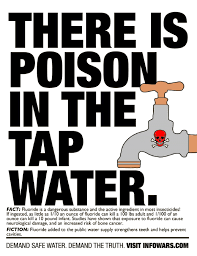
(NaturalNews) Fluoride, long added to our drinking water to improve oral health, is probably useless and even harmful to public health.
Its effectiveness is based on shaky science from the 1950s, yet big dental associations around the world keep promoting the addition of fluoride to our drinking water.
"The sad story is that very little has been done in recent years to ensure that fluoridation is still needed [or] to ensure that adverse effects do not happen," says Dr. Philippe Grandjean, an environmental health researcher and physician at Harvard University.
A little bit of history
In the early 1930s the link was made between fluoride and both mottling – or tooth staining – and stronger, healthier teeth. By the mid-40s the U.S. Public Health Service was convinced that artificial fluoridation of drinking water to 1.0 ppm would provide better oral health without causing mottling from over-fluoridation.
In 1945, they started to add fluoride to a test environment, and by 1950 declared the test a huge success, reporting a 50 percent reduction in cavities. (This number may be slightly misleading). At the same time, people started to improve their oral health practices, and there was an increase in the use of fluoridated toothpaste, too.
Since then, fluoridation of drinking water has been pushed upon us as necessary to improving oral health. It was recommended that every community without naturally occurring fluoride in their water add it to their water supply.
"They have to justify forcing this on people who don't want it – it's a violation of the principle of informed consent," Paul Connett, a Briton who taught chemistry at St Lawrence University, in New York, for 23 years, and helped set up the Fluoride Action Network in the US, told The Guardian. "You can couple that with the fact that once you put it in the water you can't control the dose or who it goes to. Also, is it effective? At least demonstrate that it's effective and then demonstrate that it's safe."
"Studies describing fluoride as a 'neurotoxicant' should ring alarm bells," he added.