










Breaking News
 The Survival Essentials Everyone Should Have at Home
 US Strikes Iran's Qeshm Island: Wall Street Journal
 We followed USAID money to Serbia and Poland, and uncovered election interference, a coup, and...
 As Trump 'Makes Nice' With Moscow, the CIA Has Other Ideas
Top Tech News
 PRP vs Exosomes vs Stem Cells: Which Fits Your Condition?
 SHOCKING: The Secret (Frantzve) Family Business
 Microreactor Gets DOE Approval for Full Power Testing, Previously Contracts with Army...
 Ford Fathom: Everything We Know About The Sub-$30,000 Affordable EV Truck
 Love it or loathe it, AI is birthing a golden age of science
 SpaceX has no competition -- Saurav Shroff, Starpath
 Living computers forge a 'hive mind' and work together to outsmart AI
 The Faraday duffle bag: A digital lifeline in a surveillance-saturated world
 Delivery Robots Accused Of Scanning Customers' Faces, Sharing Biometric Data
 FDA-Approval for Drill-Free Cavity Care May Be Imminent After Great Phase 3 Treatment Trial



As Trump 'Makes Nice' With Moscow, the CIA Has Other Ideas
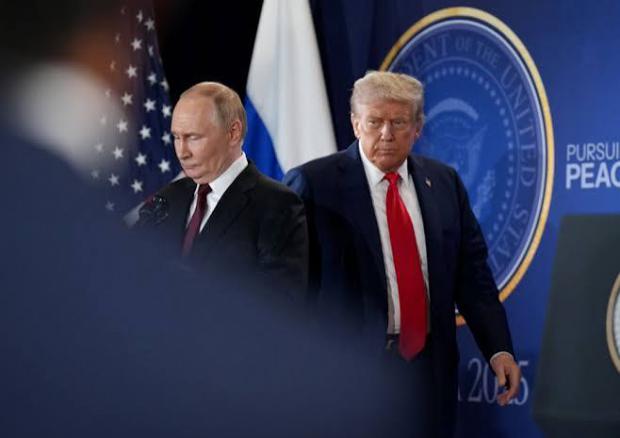
The Atlantic on October 23 published a profile of CIA chief John Ratcliffe. Its subheadline contains the most significant "tell" from the piece—"CIA Director John Ratcliffe leads an agency that's at war with Russia, even as Trump makes nice with Putin."
The Atlantic article makes no bones about its ulterior purpose. It is to present Ratcliffe as an even-handed professional who has mastered the intricacies of the Ukraine War and tells it "like it is" to the president, leaving the latter to decide his options.
This panegyric to Ratcliffe, however, hides substantive issues about the probity of CIA intelligence analyses, their impact on policy, and the extent to which the pure excitement of militarized covert action inevitably hobbles intelligence agencies and analytic reporting.
Intelligence is never wholly objective. And its professionalism largely hangs on service culture, which can—and does—change.
As one example, a former head of the IDF's Military Intelligence research and analysis division, General Itai Brun, warned that Israel's inability to recognize what Hamas was planning for October 7 resulted, not from a lack of information, but from a failure of culture and approach. Per the Times of Israel's report of his comments:
Even after the massacre, intelligence didn't internalize that Hamas believed it could succeed…. The whole military intelligence network "was not listening, because it was convinced it knew…. It could not accept the possibility that it was wrong.
So, when it comes to "culture," in this sense, two points in the Atlantic piece stand out: First, the article hints that Ratcliffe is seen by his staff to be "clear-eyed about the threat Russia poses not just to Ukraine—but to the United States and its allies." This suggests that Radcliffe sees Russia as an eternal enemy of the West, or at least a current enemy with nefarious intentions. Secondly, the article emphasises that the CIA is in "the lead" on Ukraine and that its paramilitary wing—Covert Action—is thrilled at being so busy. As Larry Johnson, a former CIA official, outlines:
The CIA helps Ukraine knock out Russian refining capacity. Diesel prices soar. Then… in the middle of peace talks in Miami… President [Trump] announces a deal for Russia to sell its diesel on the world market…. So the United States is simultaneously paying to destroy Russian diesel production and begging Russia to sell it more diesel. You could not design a more incoherent policy if you tried.
The Atlantic piece lends credence to what has long been supposed—that Trump's attempts to secure a "deal" with Russia (most recently by importing Russian diesel into America to bring the price down for the midterm elections) is a deceit intended to coax Moscow towards making a deal (unfavorable, in the Kremlin optic) with Trump.