










Breaking News
 The Biggest Crypto Theft In History
 Tucker Carlson Answers Your Most Asked Questions
 Microreactor Gets DOE Approval for Full Power Testing, Previously Contracts with Army...
 Why Does it Take So Long to Find Out Who Won?
Top Tech News
 Microreactor Gets DOE Approval for Full Power Testing, Previously Contracts with Army...
 Ford Fathom: Everything We Know About The Sub-$30,000 Affordable EV Truck
 Love it or loathe it, AI is birthing a golden age of science
 SpaceX has no competition -- Saurav Shroff, Starpath
 Living computers forge a 'hive mind' and work together to outsmart AI
 The Faraday duffle bag: A digital lifeline in a surveillance-saturated world
 Delivery Robots Accused Of Scanning Customers' Faces, Sharing Biometric Data
 Brace Yourselves: Serious Trouble Brewing In The Data Center Industry
 FDA-Approval for Drill-Free Cavity Care May Be Imminent After Great Phase 3 Treatment Trial
 California Startup Says It Has Injected AI-Designed Virus Into Humans For First Time



Why Pope Leo is set to make history if he votes in the US midterms
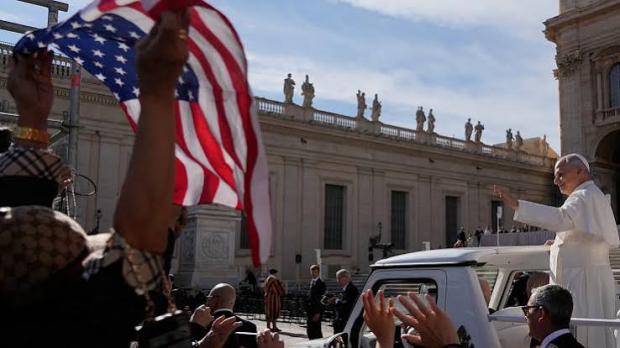
The head of the Catholic Church and sovereign of Vatican City may be about to do something no pope has done before: vote in an American election.
Pope Leo XIV, the Chicago-born pontiff whose legal name is Robert Francis Prevost, has requested a mail-in ballot for the November 3 midterm elections in Illinois.
If he completes and returns it, he will become the first pope to vote in a US election.
This has prompted many people to ask one simple question. How can the leader of a foreign sovereign state take part in American midterms?
The answer is less exotic than it sounds.
Becoming pope does not cancel a person's US citizenship, Illinois lets any registered voter vote by mail without giving a reason, and a federal law protects the voting rights of Americans who live overseas.
Nothing in US law stops him
Pope Leo XIV is a natural-born American citizen. He was born in Chicago in 1955 and grew up in the suburb of Dolton.
When he was elected pope in May 2025, he became the first American to lead the Catholic Church. Nothing about that election automatically ended his US citizenship.
US Supreme Court precedent explains why. In Afroyim v Rusk (1967) and Vance v Terrazas (1980), the justices held that the government cannot take away a person's citizenship against his will, and that losing it requires proof of intent to give it up.
Legal experts also note that nothing in American law prevents a private citizen from becoming the sovereign of a foreign state, and that the pope is not a federal officeholder.
Unless Leo signs a formal renunciation before a US consular officer, he remains a citizen. Being head of state of Vatican City is a role he holds in addition to his American nationality, not instead of it.
The Pope's ballot request
The Chicago Sun-Times first reported on Thursday that the pope had requested a vote-by-mail ballot.
Kim Fladhammer, chief of staff at the Will County Clerk's Office in Illinois, confirmed to the newspaper that Robert Francis Prevost is on the list of people who asked for a mail ballot for this election.