










Breaking News
 Iranian Media Reports Another US Strike Against Iran's Qeshm Island
 Is Learning by Starvation and Civil War the Only Way to Return to the Constitution?
 What the New $20 Million Bounty for Iran Intel May Be Telling Us
 WATCH LIVE: More White House Sources Confirm President Trump Strongly Considering Imminent...
Top Tech News
 Dude turns a $23 used smartphone into the 4G brain of an RC aircraft.
 China's World-Beating Supercar Just Hit 312 MPH
 Pentagon Delivers 25,000+ Drones And Counter-Drone Systems To CENTCOM In A "Massive Surge"
 Prism puts an eye-controlled Linux computer on your face
 Remember Yesterday: AI For Today and Tomorrow
 Robot Mowers Invade America's Golf Courses, Putting Groundskeepers On Notice
 Monstrous 13-foot mecha craves the dangerous jobs humans avoid
 Scentronic tech lets you smell the internet
 Virgin Galactic's new rocket plane revives its bid for a space airline
 The metal kept moving east while the sellers ran, and Ronnie called the flush a week early



18,000+ Kids Injected With Vaccines While Unconscious At Colorado Hospital
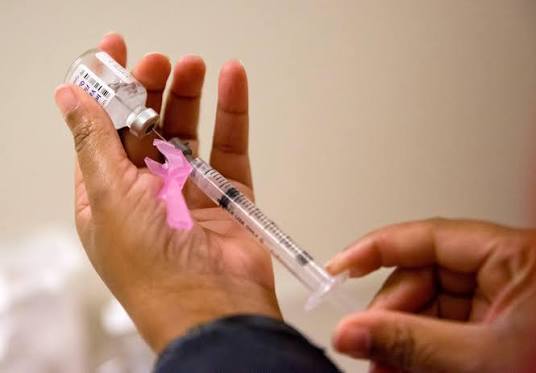
The revelation comes after this website reported yesterday that Children's Hospital of Philadelphia has injected 2,054 children with flu vaccines under anesthesia.
The AAP News piece behind a $35 paywall was written by Drs. Caroline A. Pasquariello and Kim M. Strupp, both anesthesiologists.
Their article admits that under anesthesia or sedation, "[a]dditional vaccinations are administered ... particularly for children with neurocognitive conditions who are unable to tolerate vaccination without sedation."
The practice raises serious questions about informed consent and the safety of children being vaccinated while under anesthesia.
Who independently verified the safety of vaccinating children under anesthesia?
What happens when vaccine reactions are mistaken for surgical complications?
And who is accountable if these vulnerable children are harmed?
Medical Studies Warn Vaccinating Children Under Anesthesia Could Conceal Dangerous Complications
Multiple peer-reviewed studies address why administering vaccines during or immediately around surgery and anesthesia can create problems, primarily around fever, diagnostic confusion, and immune effects.
The following literature repeatedly show that vaccine-induced fever and other side effects can be difficult to distinguish from surgical or anesthetic complications.
And that there is limited direct data on immune responses when the two are combined.
Siebert JN, Posfay-Barbe KM, Habre W, Siegrist CA. Pediatric Anesthesia. 2007;17(5):410-420. This is apparently the main systematic review on the topic. It notes that anesthesia and surgery produce immunomodulatory effects and that "inflammatory responses and fever elicited by vaccines may interfere with the postoperative course." The authors explicitly recommend a delay (2 days for inactivated vaccines, 14-21 days for live vaccines) specifically "to avoid the risk of misinterpretation of vaccine-driven adverse events as postoperative complications." They found no direct studies measuring vaccine responses under anesthesia and concluded the immune effects are minor/transient, but still flagged the diagnostic problem as a practical reason to separate the two.
Ingelmo P, et al. (Current Opinion in Anaesthesiology, 2017;30(3):368-375). This review states that "common vaccine side-effects may be misinterpreted as postsurgical complications" and that surgery/anesthesia "may decrease the efficacy of a vaccine, or promote vaccine-related complications." It recommends postponing elective surgery 1 week after an inactivated vaccine and 3 weeks after a live vaccine, and also delaying vaccination after surgery for the same diagnostic reason. It notes there is no consensus on timing among anesthesiologists and pediatricians.