










Breaking News
 Iranian Media Reports Another US Strike Against Iran's Qeshm Island
 Is Learning by Starvation and Civil War the Only Way to Return to the Constitution?
 What the New $20 Million Bounty for Iran Intel May Be Telling Us
 WATCH LIVE: More White House Sources Confirm President Trump Strongly Considering Imminent...
Top Tech News
 Dude turns a $23 used smartphone into the 4G brain of an RC aircraft.
 China's World-Beating Supercar Just Hit 312 MPH
 Pentagon Delivers 25,000+ Drones And Counter-Drone Systems To CENTCOM In A "Massive Surge"
 Prism puts an eye-controlled Linux computer on your face
 Remember Yesterday: AI For Today and Tomorrow
 Robot Mowers Invade America's Golf Courses, Putting Groundskeepers On Notice
 Monstrous 13-foot mecha craves the dangerous jobs humans avoid
 Scentronic tech lets you smell the internet
 Virgin Galactic's new rocket plane revives its bid for a space airline
 The metal kept moving east while the sellers ran, and Ronnie called the flush a week early



BREAKING: The Most Comprehensive Ivermectin–Mebendazole Cancer Paper to Date Finds 37...
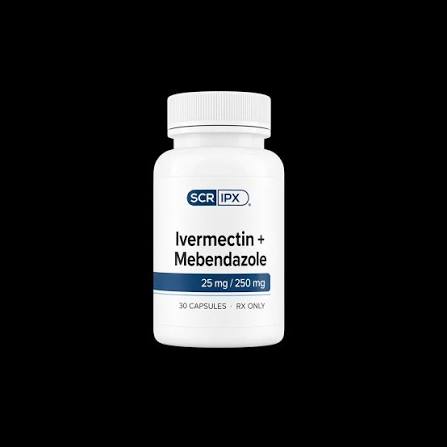
We synthesized decades of evidence from over a 100 studies, revealing one of the broadest repertoires of anticancer mechanisms ever documented for an off-patent drug combination.
For decades, ivermectin and mebendazole have been widely used to treat parasitic infections. Both appear on the World Health Organization's Model List of Essential Medicines, while the discovery of ivermectin was recognized with the 2015 Nobel Prize in Physiology or Medicine. Yet a growing body of scientific research has revealed that these inexpensive, off-patent compounds also interact with an extraordinary range of molecular pathways involved in cancer growth, survival, metastasis, and treatment resistance.
Our new investigation builds upon our earlier real-world study of 197 cancer patients prescribed combination ivermectin–mebendazole therapy. Among the 122 patients who completed six-month follow-up, 84.4% reported clinical benefit, including 32.8% reporting no evidence of disease, 15.6% reporting tumor regression, and 36.1% reporting stable disease. That study raised an important question: What biological mechanisms might explain the large clinical benefit signal?
Now, the research team at the McCullough Foundation and The Wellness Company has synthesized decades of scientific evidence from more than 100 studies in the most comprehensive review to date examining the anticancer potential of combination ivermectin and mebendazole.
Our new 44-page paper, titled "Combination Ivermectin and Mebendazole: A Comprehensive Review of Anticancer Mechanisms, Preclinical Activity, and Clinical Evidence as Adjunctive Treatment in Cancer Patients," was authored by Nicolas Hulscher, MPH (myself); James A. Thorp, MD; Kelly Victory, MD; Peter Gillooly, MSc; Peter A. McCullough, MD, MPH; and Harvey Risch, MD, PhD.
We examined published mechanistic, laboratory, and clinical evidence through October 2026, bringing together findings that had largely been investigated separately.
Major Findings
29 distinct anticancer mechanisms for ivermectin, spanning oncogenic signaling, mitochondrial dysfunction, nuclear transport, immune regulation, and treatment resistance.
26 distinct anticancer mechanisms for mebendazole, including microtubule disruption, angiogenesis inhibition, kinase targeting, immune activation, and chemotherapy sensitization.
37 distinct anticancer mechanism classes across both compounds, after accounting for overlapping molecular targets and pathways.
Preclinical anticancer activity across 25 human cancer types, including breast, colorectal, lung, prostate, pancreatic, ovarian, brain, and hematological malignancies.
Complementary molecular actions: The drugs influence different aspects of cancer biology while sharing activity involving cancer stem-like cells, hypoxia signaling, DNA damage responses, and multidrug resistance.
Promising randomized clinical findings: In a 40-patient metastatic colorectal cancer trial, adding mebendazole to conventional treatment produced a 65% tumor response rate versus 10% in controls, alongside median progression-free survival of 9.25 versus 3.00 months.