










Breaking News
 It Has Begun: They Have Launched A New Military Operation Involving 100,000 Soldiers...
 House Bill Would Ban Federal Use of Flock ALPR Data
 The Kill Zone: Why Your Bunker's Distance From the City Might Get You Killed
 European Central Bank calls for merchants to participate in digital euro pilot
Top Tech News
 Most artificial limbs rely on silicone or plastic to mimic human hands.
 Flying cell tower beams phone signal to Japan from 10 miles up
 Chinese Commercial Reactor Achieves Nuclear Fusion with Clean Hydrogen-Boron Fuel
 Med Beds Just Took a MASSIVE Step Forward, Healing People in Days!
 Palmer Luckey: Autonomous Weapons Are Ancient and Why Anduril Won't Build Humanoids | EP #295
 A laser just photographed objects through six feet of concrete
 Elon Musk's Next-Gen Motor Destroy Entire EV Industry
 China's disputed satellite refueling heralds new space war era
 BYD Will Put Solid-State Batteries In An EV Next Year: Executive
 FDA-cleared exoskeleton puts spinal-cord patients back on their feet



The Kill Zone: Why Your Bunker's Distance From the City Might Get You Killed
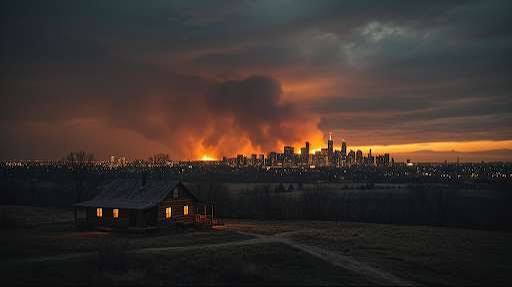
The hinterlands will not merely empty; they will detonate. What we currently dismiss as "remote"—those skeletal towns gasping along county routes, the double-digit population clusters clinging to mountain ridges—will become the primary theaters of human predation. Distance, once the prepper's sanctuary, mutates into a liability of catastrophic proportions. The cities will hemorrhage their inhabitants not in orderly columns but in ravenous streams, and these streams will not stop at the exurbs. They will penetrate deep into what you believed was sanctuary, driven not by hope but by the mathematics of last resorts. You stocked beans and bullets. You failed to account for the sheer kinetic energy of eighty million stomachs aching in unison.
Is your retreat positioned within the kill zone of secondary collapse? That question now matters more than how many rifles you own or how deep your well runs.
Most people move through civilization without perceiving the buffer systems that keep them alive. Trucks move goods. Transactions move money. Infrastructure keeps shelves stocked and streets merely uncomfortable rather than murderous. Remove those systems, and the vacuum that follows does not produce noble cooperation. It produces hunting parties.
Cities facing systemic collapse do not simply suffer in place. They expel their most desperate and capable elements into surrounding countryside. These groups do not behave like refugees in sentimental historical dramas. They behave like organized predators who have realized that law enforcement no longer exists.
Preppers have spent decades treating distance as if miles alone conferred immunity. Thirty miles. Fifty miles. Two hundred miles. These numbers circulate through forums and manuals with religious certainty, as if asphalt accumulation erects magical barriers against human intent. Such thinking belongs to children, not survivors.
Linear distance matters less than topological vulnerability—how your location sits within webs of roads, rivers, rail lines, and landmarks that desperate humans follow when GPS fails and fuel becomes currency. A cabin forty miles from Denver along a major interstate faces greater danger than a homestead eighty miles from Chicago but accessible only via unmarked logging roads requiring local knowledge and four-wheel-drive capability.
Understanding desperation requires understanding its timeline. Human bodies survive roughly three weeks without food, but minds fracture far sooner. After seventy-two hours without resupply expectation, urban populations exhibit what military strategists call "behavioral cascade"—rapid transition from civic compliance to tactical mobility. By day five, average households exhaust their pantries. By day seven, pharmacies lie looted, gas stations drained, police either barricaded in stations or departed for family compounds.
Day ten marks emergence of the "foraging radius"—maximum distance motorized, armed groups can travel from city centers with available fuel, operating on assumptions that they must return or find sustenance before vehicles become worthless metal.