










Breaking News
 Trump Explains Why He's Okay With North Korea Having Nukes, But Not Iran
 Hegseth Reveals "AutoWarCom" As $74 Billion Drone Splurge May Ignite This Stock
 Treasury Yield 30 Years (^TYX)
 40 Percent Error Rate Found In Afghan Refugee Vetting Samples, Inspector General Finds
Top Tech News
 Med Beds Just Took a MASSIVE Step Forward, Healing People in Days!
 Palmer Luckey: Autonomous Weapons Are Ancient and Why Anduril Won't Build Humanoids | EP #295
 A laser just photographed objects through six feet of concrete
 Elon Musk's Next-Gen Motor Destroy Entire EV Industry
 China's disputed satellite refueling heralds new space war era
 BYD Will Put Solid-State Batteries In An EV Next Year: Executive
 FDA-cleared exoskeleton puts spinal-cord patients back on their feet
 Your Robotic Vacuum Is Watching You -- Could It Someday Testify Against You in Court?
 Why Unigrid's Sodium-Ion Batteries Are the Game-Changer for Off-Grid Energy Storage
 This Battery On Wheels Makes Any Diesel Truck Electric In 5 Minutes



40 Percent Error Rate Found In Afghan Refugee Vetting Samples, Inspector General Finds
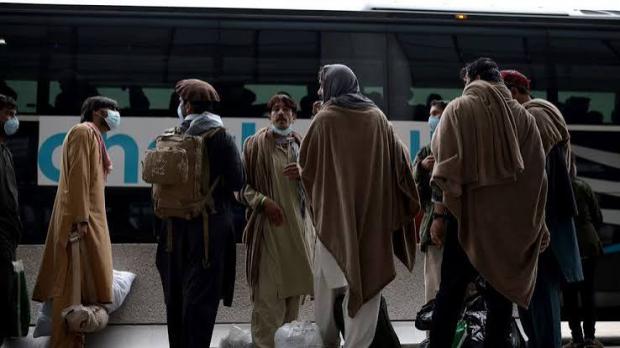
The report analyzed data from Operation Allies Welcome, which was initiated in the aftermath of the U.S. withdrawal from Afghanistan in 2021 and aimed to resettle roughly 97,000 Afghan nationals in the United States.
The DHS Office of Inspector General (OIG) analyzed a sample of 678 applications from 13,682 adjudicated applications filed by Afghan nationals resettled in the United States under the program.
The analysis identified a 40 percent error rate in adjudicating asylum files, including 303 missed aliases, 45 unresolved records, 23 missing security checks, and 115 other documentation issues, the OIG said in a Sept. 23 report.
"Most errors resulted from missed aliases or incomplete documentation, including two cases related to potential inadmissibility on terrorism-related grounds," the report states.
One of the terrorism-related errors involved an asylum officer failing to include an applicant's Terrorism-Related Inadmissibility Grounds worksheet in the case file. The second error involved officials failing to indicate whether they approved or disapproved an asylum officer's analysis of an applicant subject to Terrorism-Related Inadmissibility Grounds.
In a Sept. 29 statement, DHS said that Operation Allies Welcome led to many criminal immigrants being released into the United States, including those accused of sexual battery, kidnapping, drug possession, hit-and-runs, and lewd or lascivious acts with a minor.
For instance, in November 2025, DHS assisted the FBI in arresting an Afghan national who was charged with threatening to kill Americans. He was in the United States as part of Operation Allies Welcome.
In December 2025, a member of the ISIS terrorist group's Afghanistan affiliate who entered the United States under the operation was arrested. And in March this year, an Afghan national allowed into the country under the program who previously was convicted of indecent exposure to a minor was arrested.
In a June 2022 statement, U.S. Citizenship and Immigration Services (USCIS), under the Biden administration, had announced that Afghans who have supported and worked with the United States in Afghanistan and have undergone rigorous vetting could qualify for protection and other immigration benefits.
Then-DHS Secretary Alejandro N. Mayorkas said in the statement that this would "allow eligible individuals who pose no national security or public safety risk to receive asylum, refugee status, or other legal immigration status, demonstrating the United States' continued commitment to our Afghan allies and their family members."