










Breaking News
 An open letter to the honorable people of the United States of America
 How the Fed's Printing Press Created Today's Wall Street Casino
 Each SpaceX 250 Kilowatt Starlink AI Satellite Is More Power Than the Space Station
 That Little Blue Light
Top Tech News
 A laser just photographed objects through six feet of concrete
 Elon Musk's Next-Gen Motor Destroy Entire EV Industry
 China's disputed satellite refueling heralds new space war era
 BYD Will Put Solid-State Batteries In An EV Next Year: Executive
 FDA-cleared exoskeleton puts spinal-cord patients back on their feet
 Your Robotic Vacuum Is Watching You -- Could It Someday Testify Against You in Court?
 Why Unigrid's Sodium-Ion Batteries Are the Game-Changer for Off-Grid Energy Storage
 This Battery On Wheels Makes Any Diesel Truck Electric In 5 Minutes
 Mass-Production of AI Infrastructure – Speed Up by 10X
 3D-printed Martian mud homes look critical for life beyond Earth



That Little Blue Light
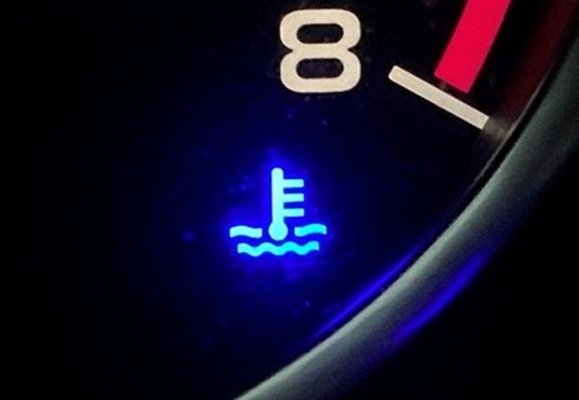
Probably not – assuming it's working properly.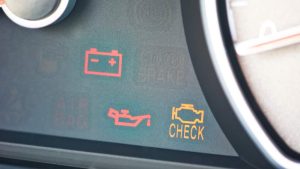
Many newer cars have a blue light in the dash that lights up when you first start the car's engine after the car has been sitting overnight – or at least, long enough to have cooled down. That ought to give you a hint about what the blue light means (it does not mean attention K-Mart shoppers). It means the engine is cold – and that you ought to give it a couple of minutes to warm up before you floor the accelerator pedal.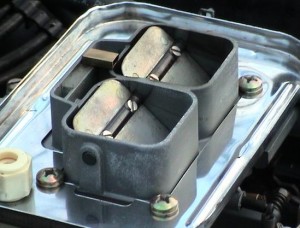
In the analog days – when engines had mechanical fuel delivery devices – carburetors – they had these things called a choke. The choke was basically a metal door that snapped closed when you pushed down on the gas pedal, which is not the same thing as the modern car's accelerator pedal. The gas pedal was physically linked to the carburetor via ca able. When you pushed down on the gas pedal, you caused gas to be squirted (via a spring-loaded plunger-like thing called an accelerator pump) into the intake manifold, which is what the carburetor sat on top of. Pushing down on the gas pedal also caused the choke to close – to snap shut – via a mechanical linkage mechanism, typically triggered by a heat sensing metal coil that expanded or contracted, according to engine temperature. This was a kind of analog-era iteration of the electronic sensors modern, fuel-injected engines all have. Just without the electronics and sensors.
Anyhow, the function of the choke is to restrict airflow into the carburetor – hence "choke" – which serves to temporarily richen the air-fuel ratio. The richer (more gas in the air-fuel mix) package helps cold-start the engine and the choked airflow also raises the cold idle speed to rise to about 1,500 RPM to help the engine warm up and also to keep it running while it's warming up. After you got the engine started, the next thing you did – in the analog era – was give the engine about 15-30 seconds to warm up a bit and then you pushed down again on the gas pedal, to release the choke. If the engine had warmed up enough, the choke door would snap open and the engine would settle down to normal idle RPM, usually around 750 RPM. At this point, you knew the car was warmed up enough to drive – but in those days – people also knew that it was sound policy to drive with a light right foot for about five minutes or so, to let the engine fully warm up. Metals/alloys expand at different rates as they heat up. Oil is thicker when it's cold, too.
Giving everything time to reach normal operating temperature is something analogous to stretching before you work out.