










Breaking News
 What does it mean to win the AI race?
 SpaceX's $100 Billion Spaceport Plan Raises Questions on Funding
 Patients Who Took Tamiflu More Likely to Die Than Those Who Didn't, New Trial Finds
 40 Trillion Reasons for Economic Collapse – Part 1, by Single Farmer
Top Tech News
 Elon Musk's Next-Gen Motor Destroy Entire EV Industry
 China's disputed satellite refueling heralds new space war era
 BYD Will Put Solid-State Batteries In An EV Next Year: Executive
 FDA-cleared exoskeleton puts spinal-cord patients back on their feet
 Your Robotic Vacuum Is Watching You -- Could It Someday Testify Against You in Court?
 Why Unigrid's Sodium-Ion Batteries Are the Game-Changer for Off-Grid Energy Storage
 This Battery On Wheels Makes Any Diesel Truck Electric In 5 Minutes
 Mass-Production of AI Infrastructure – Speed Up by 10X
 3D-printed Martian mud homes look critical for life beyond Earth
 Inside The Texas Factory Racing To Break China's Grip On EV Magnets



SpaceX's $100 Billion Spaceport Plan Raises Questions on Funding
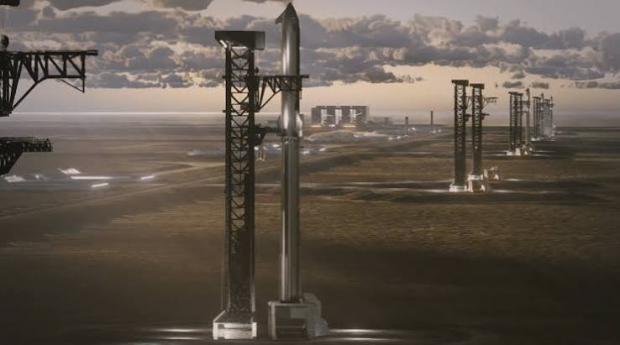
The proposal, which was shared with investors in a private presentation, outlines a facility designed to support the company's next-generation Starship launch system. The location of the spaceport has not been disclosed, though company officials said construction is slated to begin within two years.
Investors who attended the presentation raised immediate concerns regarding the lack of a detailed funding breakdown, according to the report. The scale of the proposed expenditure has drawn comparisons to the annual budgets of major government space agencies, which are typically measured in tens of billions of dollars. The company has not issued a public statement confirming the report's figures, and representatives did not respond to requests for comment.
Scope and Timeline of the Spaceport Project
The proposed facility is designed to support Starship launches, including crewed missions to Mars and lunar operations, according to company materials cited in the report. Plans include multiple launch pads, a dedicated manufacturing facility, and an on-site power plant, according to internal documents shared with investors. SpaceX has previously stated that Starship is central to its long-term ambitions, with the vehicle already contracted for lunar missions under NASA's Artemis program [2].
SpaceX representatives said the first phase of construction would require $25 billion in initial capital, with the remainder of the $100 billion spread over a decade, according to the report. The timeline for the project has not been finalized, and officials said the company is still conducting site surveys and preliminary engineering work. A competing aerospace executive, who spoke on condition of anonymity, noted that the plan could strain supply chains and talent pools across the industry, though the executive also acknowledged SpaceX's history of aggressive timelines.
Investor Skepticism on Funding Sources
In a private call with bondholders, several investors questioned whether SpaceX can fund the project without issuing new equity, according to the MarketWatch report. One analyst on the call noted that SpaceX's current cash flow from Starlink and launch services is insufficient to cover the projected annual spending of $10 billion. The analyst's assessment was based on financial documents shared during the presentation, which showed current operating revenue trailing the projected capital requirements.
A shareholder quoted in the report said, "We haven't seen a credible plan for where the money comes from." The quote reflects a broader sentiment among institutional investors who have grown accustomed to SpaceX's rapid capital raises but are now questioning the sustainability of its spending. The company has not responded publicly to the concerns raised during the call.