










Breaking News
What The Hell Are We Doing? The Illogical, Irrational, Clown Show We Find Ourselves In
 The Herd Immunity Fallacy
 First, Quit Pretending...
 More Hospitals Are Being Bought By Private Equity; Here's How It's Changing Healthcare...
Top Tech News
 Tesla Model 3 killer charges from 10 to 97% in just 9 minutes
 World-first unpowered DNA computer sets speed record
 I Power 5 Buildings Off-Grid. Here's How
 The US government is pushing hard to get a working nuclear fission reactor into space by late 2028
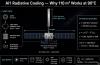 SpaceX Starmind AI in Space Radiator
 China Will Dominate Global Nuclear Energy Through 2035, Analyst Says
 These Absolutely Wild-Looking EVs Are Saudi Arabia's First Homegrown Cars
 BEYOND THE MOON: NASA plans a nuclear-powered fleet to push DEEPER into space
 Big Oil Backs Mazama's $135 Million Bet On Superhot Geothermal
 Quantum compass takes flight on Northrop's Lumberjack drone


More Hospitals Are Being Bought By Private Equity; Here's How It's Changing Healthcare...

If you live in Kentucky, your chances are one in six. In New Mexico, more than one in three.
Walk into an emergency room, and there's a 40 percent chance the doctor who stitches you up works for a staffing company owned by private investors, not the hospital.
At a time when less than half of Americans report being consistently able to afford healthcare, private investors are looking to hospitals and physician practices as a source of profit.
Private equity firms, which invest money on behalf of pension funds, universities, sovereign wealth funds, and wealthy individuals, buy healthcare providers expecting them to produce a better return than the stock market.
That may be no surprise to the 82 million Americans who make tradeoffs such as choosing between buying food and going to the doctor, nor to the nearly half of Americans with healthcare debt who have drained their savings to pay medical bills.
Providers are attractive targets for private investors for the same reasons any business might be, according to analysts.
Hospitals and physician practices are virtually recession-proof. They're fueled by a steady supply of aging customers. Historically, there have been lots of small, independent operators in the healthcare industry, ripe for consolidation. And they need vast amounts of capital to expand or even maintain complex facilities.
Private investors bring the business savvy and operational know-how that many healthcare providers lack. That has made physician offices and hospitals more efficient and productive, analysts say.
"Private equity has made a tremendous amount of investments in health technologies," Kelly Arduino, an executive with 25-years' experience in healthcare management, told The Epoch Times. "That's where we would see the biggest success."
But that success comes at a price.
Gains in efficiency and value to investors have left some hospitals bereft of real assets, loaded with debt, and struggling to maintain quality care, some studies indicate.
Private investors are buying into the healthcare system to extract profit, which can permanently change the structure of a healthcare institution, sometimes for the worse.