










Breaking News
 Food Chain Reaction--
A Global Food Security Game
Food Chain Reaction--
A Global Food Security Game
 Mass-Production of AI Infrastructure – Speed Up by 10X
 3D-printed Martian mud homes look critical for life beyond Earth
 Ancient underwater city discovered 'near resting place of Noah's Ark' rewrites human his
Top Tech News
 Tesla Model 3 killer charges from 10 to 97% in just 9 minutes
 World-first unpowered DNA computer sets speed record
 I Power 5 Buildings Off-Grid. Here's How
 The US government is pushing hard to get a working nuclear fission reactor into space by late 2028
 SpaceX Starmind AI in Space Radiator
 China Will Dominate Global Nuclear Energy Through 2035, Analyst Says
 These Absolutely Wild-Looking EVs Are Saudi Arabia's First Homegrown Cars
 BEYOND THE MOON: NASA plans a nuclear-powered fleet to push DEEPER into space
 Big Oil Backs Mazama's $135 Million Bet On Superhot Geothermal
 Quantum compass takes flight on Northrop's Lumberjack drone


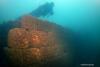
Ancient underwater city discovered 'near resting place of Noah's Ark' rewrites human his
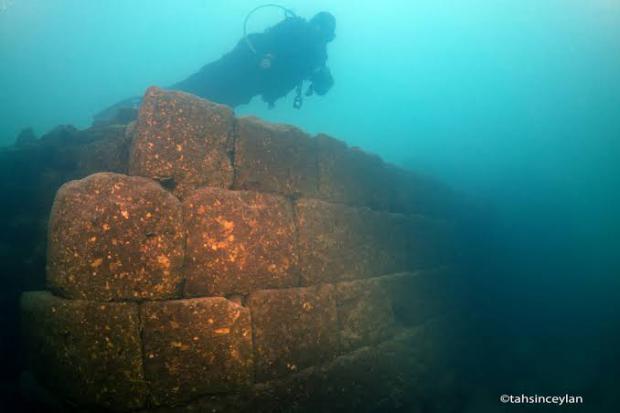
Divers have uncovered an enormous circular structure and a wall of interlocking stone blocks 75 feet below the surface of Lake Van.
Researcher Matthew LaCroix, who is part of the diving team, told the Daily Mail: 'What we know of the underwater ruins may just be a tiny piece of something much larger.'
LaCroix believes the ruins are at least 11,700 years old and could date back as far as 40,000 years, based on geological estimates for the eruptions of near by he said blocked the lake's ancient outlet and submerged the structures.
The wall features three steps leading to the circular structure and seven levels of stonework rising more than eight feet from the lakebed. 'I measured over 150 feet that this causeway continues,' LaCroix said. 'Over 150 feet, and it leads into the darkness.'
He believes the feature may lead to more buildings belonging to an undiscovered city concealed beneath the water.
'You have a civilization that had the capabilities to build unbelievable stonework and temples,' LaCroix added. 'This shows that this lost chapter of human history not only created highly advanced things that are far beyond the capabilities of iron and bronze cultures of our time, but that the dating of it puts it in a time.'
Adding to the mystery, Lake Van lies southwest of Mount Ararat and the Durup?nar formation, which some believe marks the final resting place of Noah's Ark.
Lake Van is located in the far eastern part of Turkey within the Eastern Anatolia region, close to the border with Iran. It sits roughly 90 miles from Mount Ararat, which some believe is the final resting place of Noah's Ark.
The surface area of the lake is about 1,450 square miles, making it the largest in the country.
Turkish underwater filmmaker Tahsin Ceylan discovered the first ruins in 2017, while studying Lake Van's microbiolite formations and pearl mullet.
He stumbled upon a stone fortress flanked by circular temples with precisely carved masonry.
There was also a capstone engraved with a six-spoked 'Flower of Life' symbol, a motif used by numerous cultures for thousands of years.
Salin later teamed up with LaCroix for a dive in 2025, but it was not until the footage was reviewed this year that the massive stone wall was spotted.
While archaeologists confirm the structures exist, many attribute them to the Urartian period around 3,000 years ago, or even to the medieval era.
But they have admitted that the site has yet to be fully studied or definitively dated.