










Breaking News
 Food Chain Reaction--
A Global Food Security Game
Food Chain Reaction--
A Global Food Security Game
 Mass-Production of AI Infrastructure – Speed Up by 10X
 3D-printed Martian mud homes look critical for life beyond Earth
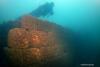 Ancient underwater city discovered 'near resting place of Noah's Ark' rewrites human his
Top Tech News
 Tesla Model 3 killer charges from 10 to 97% in just 9 minutes
 World-first unpowered DNA computer sets speed record
 I Power 5 Buildings Off-Grid. Here's How
 The US government is pushing hard to get a working nuclear fission reactor into space by late 2028
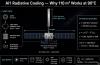 SpaceX Starmind AI in Space Radiator
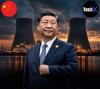 China Will Dominate Global Nuclear Energy Through 2035, Analyst Says
 These Absolutely Wild-Looking EVs Are Saudi Arabia's First Homegrown Cars
 BEYOND THE MOON: NASA plans a nuclear-powered fleet to push DEEPER into space
 Big Oil Backs Mazama's $135 Million Bet On Superhot Geothermal
 Quantum compass takes flight on Northrop's Lumberjack drone


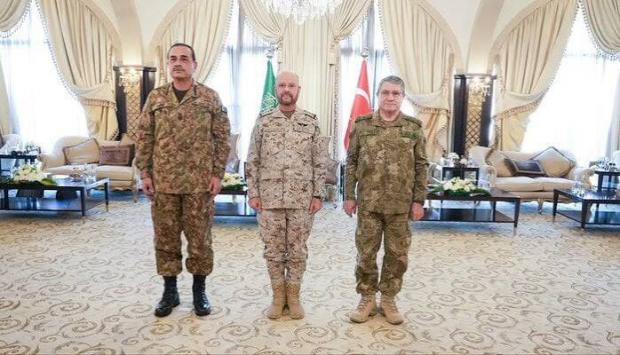
Saudi, Turkish, Pakistani Military Chiefs To Hold Urgent Meeting Over Yemen War
Of course, the Iran-aligned Houthis have been semi-frequently targeting the Saudi kingdom's territory, gong after oil export infrastructure as well as fuel storage sites, with ballistic missiles even targeting the capital of Riyadh this month, which marked a first.
Ahead of the meeting of defense chiefs, Saudi Foreign Minister Prince Faisal bin Farhan and Pakistan's Deputy Prime Minister and Turkish Foreign Minister Mohammad Ishaq Dar gathered in New York on the sidelines of the UN General Assembly to discuss developments.
They have been closely monitoring developments in Yemen, after the Saudi-backed coalition based out of Sanaa has lost the Red Sea coast area.
"The three ministers strongly condemned recent attacks targeting Mecca, as well as civilian and economic facilities in Saudi Arabia, and reaffirmed the Kingdom's right to take appropriate measures to defend its security under Article 51 of the UN Charter," Al Arabiya reports.
"They also discussed arrangements for the urgent meeting of their countries' chiefs of staff, which will examine ways to support Saudi Arabia under the defense pact," the report adds.
As for the Houthis, who now have an even tighter grip on the fate of Red Sea shipping, as of Friday they are vowing not to attack European vessels.
However, the Yemeni rebels will still fire on Saudi ships or any Israeli-linked vessels, in accord with the ongoing 'siege for siege' strategy which has already been on for months.
Earlier this month, Pakistan threatened to trigger the young Mecca Defense Pact, but so far this has stopped at mere words. A regional analyst has explained to Al Jazeera why the Yemen crisis is 'tricky' and controversial for the alliance:
The Mecca Joint Defence Agreement's first real test, being framed around the Houthis rather than Israel, sits awkwardly with the Islamic-solidarity language the pact was sold on, says Betul Dogan Akkas, assistant professor of international relations at Ankara University.
"The Mecca Defence Pact might be used, for the first time, to frame itself as defending the lands of Islam, rather than being framed around the Israeli threat in Gaza or Palestine, which would have been the more obvious framing," she told Al Jazeera.