










Breaking News
 Diesel Export Ban Off The Table? Ted Cruz Relays White House Assurances To Refinery Heads
 Saudi, Turkish, Pakistani Military Chiefs To Hold Urgent Meeting Over Yemen War
 The Commercial Real Estate Crash Is Moving From Paper Losses To Realized Losses
 Ceasefire Begins After Trump and Iran Forget Whose Turn It Was To Attack The Other
Top Tech News
 Tesla Model 3 killer charges from 10 to 97% in just 9 minutes
 World-first unpowered DNA computer sets speed record
 I Power 5 Buildings Off-Grid. Here's How
 The US government is pushing hard to get a working nuclear fission reactor into space by late 2028
 SpaceX Starmind AI in Space Radiator
 China Will Dominate Global Nuclear Energy Through 2035, Analyst Says
 These Absolutely Wild-Looking EVs Are Saudi Arabia's First Homegrown Cars
 BEYOND THE MOON: NASA plans a nuclear-powered fleet to push DEEPER into space
 Big Oil Backs Mazama's $135 Million Bet On Superhot Geothermal
 Quantum compass takes flight on Northrop's Lumberjack drone


Tesla Finally Kicks Off Semi Deliveries As Diesel Prices Skyrocket
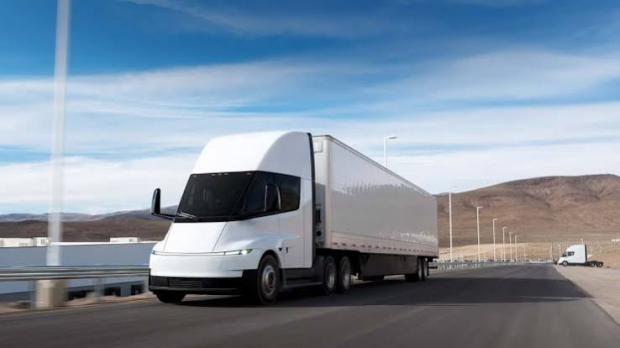
A decade after Tesla first showcased the Semi in 2017, the Class 8 truck has finally entered volume production, the automaker said at a launch event at its Gigafactory Nevada on Thursday. The first deliveries begin this week, the automaker said.
The all-electric big rig arrives at a high-stakes moment for commercial freight, as diesel prices sit at a record high due to the wars in Ukraine and Iran. They're averaging over $6.50 per gallon in the U.S. as of writing, threatening to push up costs for everything from freight rates to grocery bills for everyday Americans.
The all-electric Semi could help businesses better manage their costs over time compared to diesel trucks, according to Tesla. "The cost of electricity per mile is much less than the cost of diesel, especially in these crazy times," Tesla CEO Elon Musk said in a prerecorded video played at the event.
To support the growing fleet of Semis, Tesla executies said it plans to roll out 30 Megacharger locations, with a total of 200 megawatt-capable posts, in the U.S. by the end of this year. The Megacharger network will also be open to other electric truck manufacturers, similar to how Tesla opened up the Supercharger network for all EVs. Tesla said many owners will prefer to charge it overnight using its slower, 125 kW Basechargers, which can be installed at fleet depots.
The Semi won't be able to charge at everyday Tesla Superchargers that owners of its passenger EVs use. It comes equipped with the Megawatt Charging Standard (MCS) connector.
Perhaps the most interesting fact about the Semi is its brute charging performance. Businesses will need the Semi's gigantic battery to charge quickly to maximize uptime and productivity, and Tesla appears to have taken care of that.
The Semi will charge at peak speeds of 1.2 megawatts, which the company claims will help add 60% to its state of charge in just 30 minutes. In a charging video Tesla showed at the launch event, the Semi estimated 50 minutes to a full charge from 3%. It indeed peaked at nearly 1,200 kilowatts and was pulling more than 750 kW at 62% state of charge.
Tesla hasn't officially confirmed the Semi's battery capacity, but according to a filing with the California Air Resources Board, the packs are absolutely humongous.