










Breaking News
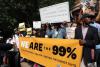 15 Years After Occupy, the Case Against the System Has Never Been Clearer
 8 Prepper Hacks for Cleaning Without Running Water
 The Economy Is Stagnating
 Britain To Appoint A Dedicated Tax Agent To Every Single Billionaire
Top Tech News
 BEYOND THE MOON: NASA plans a nuclear-powered fleet to push DEEPER into space
 Big Oil Backs Mazama's $135 Million Bet On Superhot Geothermal
 Quantum compass takes flight on Northrop's Lumberjack drone
 Terrifying AI Behavior Even Its Creators Couldn't Explain
 WW3 Near-Miss? AI Hallucinated Nuclear Weapons Components Aboard Chinese Vessel Bound For Iran
 Stripe Is Building the Toll Road for the Machine Economy
 Toyota Dakar hopeful swaps twin-turbo V6 for hydrogen fuel cells
 4-min turbo-inflatable cubic camp castle is now available in the USA
 Researchers Used Claude To Hack OpenAI Employee Accounts
 Chinese Scientists Develop New Oil Refining Method That Cuts Energy Use by 90%



15 Years After Occupy, the Case Against the System Has Never Been Clearer
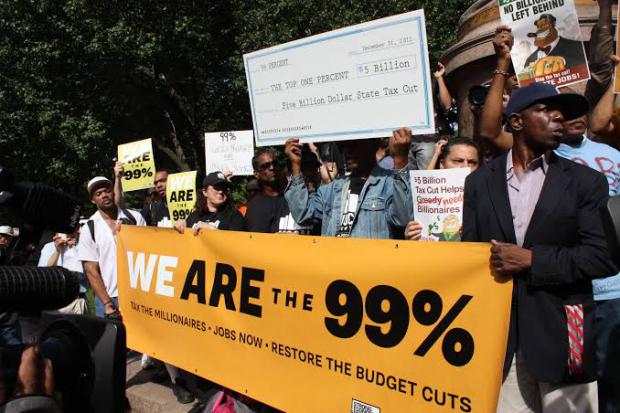
As we mark 15 years since Occupy Wall Street, it is worth remembering that the movement against inequality has a long lineage. The Gen Z-led protests flooding the streets of India, Kenya, Bolivia, and Tunisia today have been building for generations.
On the last day of November 1999, tens of thousands of people shut down the World Trade Organization summit in Seattle. Trade unionists marched alongside environmentalists, students locked arms with farmers, and for a few extraordinary days the people who run the global economy could not get into their own meeting.
The press called protesters a rabble with no coherent demand. They were wrong. The demand was simple and it has not changed: an economy that works for the many, not for a handful at the top.
That demand lands differently when you cannot afford the basics of life. In Seattle, the debate centred on trade rules. Today, people are doing the maths as they stand in front of a grocery food shop not knowing what they can afford to buy, tackle rents that consume the entire salary, and face energy bills that arrive like a threat. What was once an abstraction has become a household emergency.
Seattle did not come from nowhere. Five years earlier, the Zapatistas had risen in Southern Mexico on the day a free trade deal took effect, declaring that ordinary people had a right to refuse the terms being set for them from above.
The Jubilee movement had brought millions of people onto the streets and into churches to demand the cancellation of crushing debts owed by the world's poorest countries.
By 2001 a hundred thousand people were meeting in Porto Alegre in Brazil under the banner "another world is possible," and that same year a young man named Carlo Giuliani was shot dead protesting the G8 in Genoa, Italy.
The powerful learned early that this movement would not simply ask politely. It would demand systemic change.
Then came the crash. In 2008, the same financial system that had been sold to us as untouchable collapsed, and ordinary people were handed the bill while the bankers who broke it kept their bonuses. Out of that betrayal came the next great wave of action.
2011 brought Tahrir Square, the Spanish Indignados, the Greek fight against austerity, the Chilean students, and, in September, a small camp in the shadow of Wall Street.
The Occupy Wall Street movement gave the whole movement its slogan—"We are the 99%." A single phrase that did what a thousand policy papers could not. The protesters drew the line. There is them, and there is the rest of us, and the rest of us are almost everyone.