










Breaking News
 Diesel Is the Pretext...
 Your Opportunity to Weigh In on Federal Vaccine Policy - Deadline Sunday Sept 20
 Palantir $PLTR CEO Alex Karp says "AI companies have to be nationalized"
 It's infuriating that they know better, but sell us out until they leave
Top Tech News
 World's smallest CT scanner fits in the palm of your hand
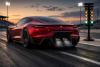 The Tesla Roadster will blow people's minds
 Peter Thiel-Funded Company Anduril to Triple the Number of Autonomous Surveillance Towers...
 Quantum computing may soon become part of the microscope itself.
 Volkswagen Just Unveiled The Most Efficient EV Ever Tested
 NASA Super Light Solar Sail Project Will Be 12-40 Times Lighter and Faster
 Space Telescope Interferometer to Image Exoplanet Continents
 Twenty-five years of "temporary": how 9/11 built a surveillance state Americans never vote
 I'll Never Buy Another WALMART Battery!
 Shoei GT-Air 3 Smart helmet drops with built-in AR for $1,500



Toyota Dakar hopeful swaps twin-turbo V6 for hydrogen fuel cells
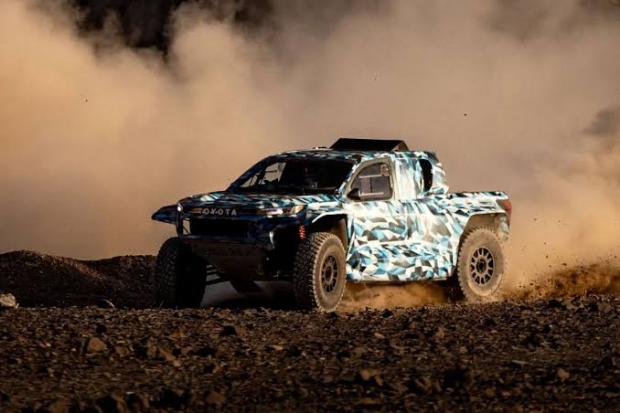
But next year Toyota's Gazoo Racing team is out to show that perhaps the future of extreme off-roading belongs not to roaring V6s – but to hydrogen. The company has just pulled the wraps off the Toyota DKR GR FC Hilux, a cutting-edge fuel-cell electric vehicle (FCEV) engineered to tackle the 2027 Dakar Rally in Saudi Arabia.
The pick-up truck replaces the twin-turbo petrol V6 found in the standard DKR GR Hilux with a zero-emission hydrogen powertrain.
Toyota chose a strategic, industry-focused reveal rather than the usual auto show glitzy unveiling. The hydrogen truck almost took second place to announcements about the technical alliances that are making the project possible. The international collaboration is spearheaded by Toyota Gazoo Racing but is working side-by-side with Jameel Motorsport – which conveniently has deep roots in Saudi Arabian motorsport.
To transform a standard Hilux into a hydrogen desert racer, Toyota also worked with Japanese automotive component giant DENSO, Toyo Tires and German engineering specialist IAV. The one-off truck is currently undergoing development, assembly and testing at Toyota's European Research and Development facility in Zaventem, Belgium. The engineers are evidently fine-tuning the complex thermal management systems required for desert survival with a hydrogen fuel cell.