










Breaking News
 How War Propaganda Justifies Conscription Into Unjust Wars
 Trump's "Russian sanctions" Have Destroyed the German Automobile Industry
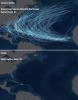 Where are the headlines? 2026 is the 'First Time in 112 Years: No Atlantic Hurricanes By Sept. 2
 CNN Staffers Panic over Paramount Merger: 'Bloodbath Coming,' Newsroom Is 'Like a Funera
Top Tech News
 BEYOND THE MOON: NASA plans a nuclear-powered fleet to push DEEPER into space
 Big Oil Backs Mazama's $135 Million Bet On Superhot Geothermal
 Quantum compass takes flight on Northrop's Lumberjack drone
 Terrifying AI Behavior Even Its Creators Couldn't Explain
 WW3 Near-Miss? AI Hallucinated Nuclear Weapons Components Aboard Chinese Vessel Bound For Iran
 Stripe Is Building the Toll Road for the Machine Economy
 Toyota Dakar hopeful swaps twin-turbo V6 for hydrogen fuel cells
 4-min turbo-inflatable cubic camp castle is now available in the USA
 Researchers Used Claude To Hack OpenAI Employee Accounts
 Chinese Scientists Develop New Oil Refining Method That Cuts Energy Use by 90%



How War Propaganda Justifies Conscription Into Unjust Wars
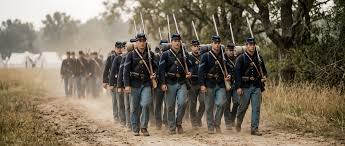
Rothbard argued that if we want men to stand in our defense, "the way to induce people to volunteer for hazardous jobs is to pay them extra as compensation." And yet, instead of offering a wage that would reward men who sign up willingly, governments rely on force to press conscripts into service. The conscript is,
. . .seized by the authorities and inducted into the armed forces. There his body and will are no longer his own: he is subject to the dictates of the government; and he can be forced to kill and to place his own life in jeopardy if the authorities so decree.
This debate recently returned to public attention when it was reported that the United Kingdom is reconsidering conscription due to what the UK government sees as escalating hostilities with Russia.
Campaigners are protesting over the prospect of conscription returning amid mounting Russian threats against Britain. A coalition of 13 British peace and faith organisations has launched a petition demanding the Government rule out military conscription, or any compulsory form of national service involving the armed forces. . . There is currently no conscription in Britain, although concerns about World War 3 have fuelled renewed discussions on how the armed forces could be expanded.
For conscription to be even remotely tolerable by the public, it is, at the very least, necessary for warmakers to persuade the public that the war is just, and worth fighting. Otherwise, people are likely to revolt, as happened in New York when the Enrollment Act of March 1863 drafted men to fight Lincoln's war.
On July 11, 1863 the first names for induction into the army were called. The next day, New York erupted into some of the most violent riots in American history. The office of the provost marshal—charged with enforcing the draft—was burned, railroad lines were destroyed, and telegraph lines cut. . . . Over one hundred people died in the rioting, thousands were wounded, and thousands of African Americans fled New York.
This attempt to corral New Yorkers into the war against their will followed soon after the Emancipation Proclamation of January 1863. The implication, following the Proclamation, was that what had started out as a politically-driven war to save the Union was now a moral crusade to free the slaves of the South—surely a just cause!