










Breaking News
 The AI Bird-Flu Scenario They Just Published
 Japan's first robot ambulance works the 9-1-1 lines for humanoids
 Cheap smartphone add-on pinpoints hidden cameras to shut down spies
 The $600 Tank That Beats a $10,000 Powerwall
Top Tech News
 Terrifying AI Behavior Even Its Creators Couldn't Explain
 WW3 Near-Miss? AI Hallucinated Nuclear Weapons Components Aboard Chinese Vessel Bound For Iran
 Stripe Is Building the Toll Road for the Machine Economy
 Toyota Dakar hopeful swaps twin-turbo V6 for hydrogen fuel cells
 4-min turbo-inflatable cubic camp castle is now available in the USA
 Researchers Used Claude To Hack OpenAI Employee Accounts
 Chinese Scientists Develop New Oil Refining Method That Cuts Energy Use by 90%
 World's smallest CT scanner fits in the palm of your hand
 The Tesla Roadster will blow people's minds
 Peter Thiel-Funded Company Anduril to Triple the Number of Autonomous Surveillance Towers...



The AI Bird-Flu Scenario They Just Published
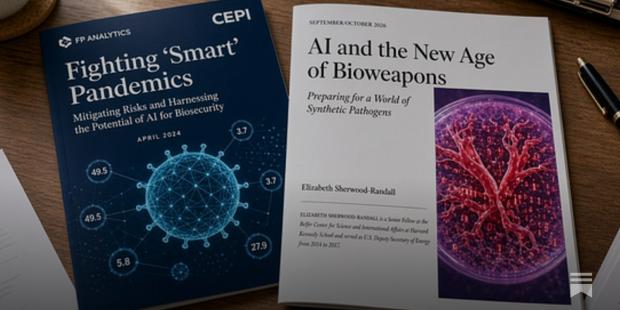
A month ago, Elizabeth Sherwood-Randall laid out a scenario in Foreign Affairs. She is not a science fiction author. She was White House Homeland Security Adviser from 2021 to 2025. She coordinated the response to the 2024 H5N1 (Bird Flu) outbreak in US dairy.
She wrote:
In the foreseeable future, a terrorist group with minimal skills could access a jailbroken AI model… The group could use the model to design a new strain of H5N1 avian influenza that is more lethal and more easily spread from animals to humans than existing strains. Connecting remotely to one of the new generation of fully equipped, contract-for-service "cloud" labs, it could anonymously arrange for the virus to be built and tested and then sent to a biomanufacturing facility to be produced at scale. From there, the group could stealthily disperse the new strain through air-handling systems at major livestock farms across the United States.
Before long, the American poultry, beef, and dairy industries would suffer massive losses. When the virus inevitably jumped to the human population, it would cause severe illness and could result in hundreds of thousands or even millions of deaths.
The response from U.S. public and private institutions—lacking both an integrated strategy and adequate tools—would be too slow, too uncoordinated, too underresourced, and too overwhelmed to stop the spread and mitigate the consequences. And soon, the virus would also cross borders, triggering food insecurity, widespread sickness, and mass casualties around the world.
Foreign Affairs, 18-Aug 2026 (archive without paywall)
That same day, the Belfer report she co-authored, Deterrence by Resilience, made policy recommendations responding to this, including restricting unlicensed models (AI) and unscreened print shops (biomanufacturing).